
PUBLICATIONS

How Russia’s Full-Scale Invasion of Ukraine Displaced Drug Trafficking Routes in Europe and Central Asia
Russia’s full-scale invasion of Ukraine in 2022 has significantly reconfigured organised crime across Ukraine and neighbouring regions. Rather than simply disrupting illicit networks, the war and resulting sanctions have displaced and reshaped them. The most visible changes have occurred in the drugs market. Synthetic drug production has increasingly relocated to Kazakhstan, while trafficking routes for heroin and cocaine have shifted towards Belarus, Central Asia and the Balkans.
Dr Alexander Kupatadze (Kings College London)
Erica Marat (NDU)
April 2026

The Boomerang Effect: Russia’s Full‑scale Invasion of Ukraine Expands Crime Rate at Home
Russia’s full‑scale invasion of Ukraine has produced a powerful internal shock that is transforming the country’s criminal landscape and the way the state deploys repression. This briefing note draws on wider research that demonstrates how the war has created a ‘boomerang effect’, whereby, the war has made Russia both more criminalised and more repressive.
Dr Alexander Kupatadze (Kings College London)
Erica Marat (NDU)
March 2026
Criminal Geographies: How the Russo-Ukrainian War Reshaped Global Crime Networks
Russia’s invasion of Ukraine has reconfigured organised crime, displacing and transforming networks across regions. Crime has grown in both neighbouring states and Russia itself, with new actors, routes and cyber‑enabled methods emerging. War and sanctions act as systemic shocks, expanding illicit markets rather than suppressing them and demanding multi‑level policy responses.
Dr Alexander Kupatadze (Kings College London)
Erica Marat (NDU)
March 2026

Addressing police and military involvement in serious and organised crime
In Addressing police and military involvement in serious and organised crime Liam O’Shea, Louis-Alexandre Berg, Alexander Kupatadze and Lucia Tiscornia present compelling comparative studies from Colombia, Georgia, and South Africa. They highlight how political will, institutional control, and prosecutorial strength are key to curbing security forces’ involvement with organised crime. The authors propose politically grounded strategies over technical fixes for sustainable, integrity-driven reform.
Dr Liam O’Shea (RUSI)
Dr Louis-Alexandre Berg (Georgia State University)
Dr Alexander Kupatadze (Kings College London)
Dr Lucia Tiscornia (University College Dublin)
December 2025
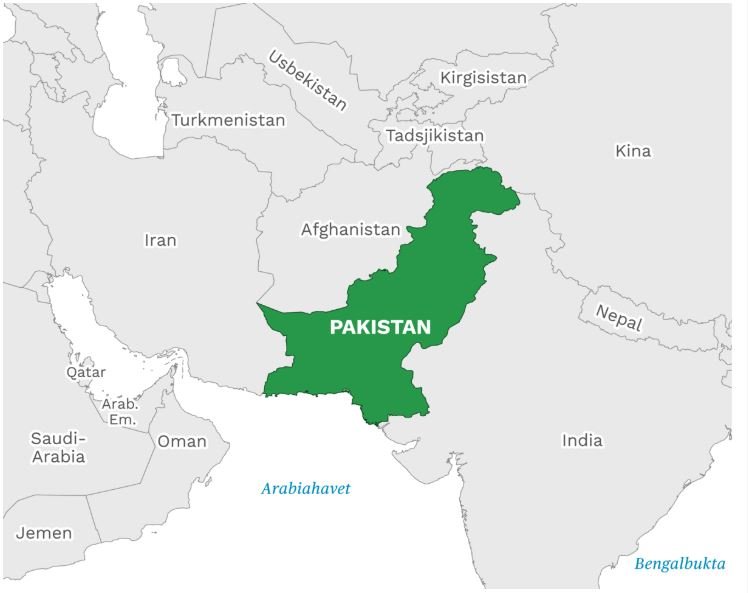
Conceptualising the interplay of corruption and an informal security welfare regime: Pakistan case study
Investigating the complex relationship between corruption and informal security welfare regimes, using Pakistan as a case study. The study reveals that corruption plays a dual role: it undermines formal welfare provision while simultaneously acting as a survival mechanism for those excluded from official support.
Dr Zahid Mumtaz (Australian National University)
Dr Caryn Peiffer (University of Bristol)
November 2025

Women and Illicit Finance in Russia’s Occupation of Ukraine
This research paper takes a gendered view of Russia’s use of illicit financial flows (IFF) in occupied Ukraine, by examining the role of women as both victims and perpetrators. The paper sheds light on the overlooked role that women are playing, be that - implementing corrupt policies, acting as proxies, or surviving under duress - while facing systemic harm, coercion, and prosecution amid gendered norms.
Dr Orly Stern
Olivia Allison (University of Exeter)
October 2025

Negotiating with Criminal Groups: Colombia’s “Total Peace”
Drawing on the findings of two new research papers from the SOC ACE research project, “Negotiating with Criminal Groups: Colombia’s Total Peace”, this briefing note summarises lessons for negotiating with criminal groups found through fieldwork in three regions of Colombia – Buenaventura, Arauca and Tumaco. The note focuses on two critical issues that emerge in contexts where rebel and criminal governance coexist with formal institutions.
Felipe Botero, Juanita Durán, Kyle Johnson, Mariana Botero, Andrés F. Aponte, Lina M. Asprilla.
March 2025

The Role of Financial Rewards for Whistleblowers in the Fight Against Economic Crime
This paper evaluates the evidence on the use of reward programmes for whistleblowers who report economic crimes, evaluating it against the key concerns in the debate surrounding the implementation of such schemes. It offers four observations for policymakers considering use of whistleblower rewards programmes in the fight against economic crime.
Eliza Lockhart
December 2024

Information Manipulation and Organised Crime: Examining the Nexus
In recent years, concerns over information manipulation have grown, particularly the disinformation tactics employed by authoritarian regimes. Yet, the role of non-state actors, specifically organised crime (OC) groups, in shaping information landscapes remains overlooked. Drawing from Nicholas Barnes' 'political criminality' concept, this paper investigates the complex connections between criminal actors and the state. The research spans various regions, with a strong focus on Eastern Europe, including Ukraine, Russia, Moldova (Transnistria), and Albania.
Dr Tena Prelec
October 2023

Economic Crime and Illicit Finance in Russia’s Occupation Regime in Ukraine
This paper details Russia's illicit economic activity in the occupied territories in Ukraine and calls for more international attention to this aspect of Russia's invasion. The report shows that since Russia occupied large parts of south-eastern Ukraine in March 2022, it has worked rapidly to incorporate these regions into Russia's economic and financial system. These activities were all illegal under Ukrainian law and some may constitute potential war crimes under international law.
Professor David Lewis
September 2023

New dynamics in illicit finance and Russian foreign policy
This paper provides an analytical overview of how Russian actors and proxies are using illicit financial flows (IFF) to support Russian foreign policy goals. It shows how Russia has used illicit finance to fund political interference campaigns, promote disinformation, and support military operations outside Russia, including the international activities of the Wagner network. It calls for a holistic approach to tackling the issue by combining effective sanctions with systematic efforts to tackle money-laundering and illicit finance in key financial and logistical hubs, including in the UK and other Western countries.
Professor David Lewis & Dr Tena Prelec
August 2023

State capture and serious organised crime in South Africa: a case study of the South African Revenue Service (2001-21)
State capture occurs when a small number of influential actors in the public and private sectors collude to change rules, regulations, legislation and institutions to further their own narrow interests at the expense of the broader public interest. In South Africa, there have been widespread allegations that several state-owned enterprises and other agencies were infiltrated by persons close to President Jacob Zuma and that they radically altered the processes and functions of these entities to serve the interests of a few individuals and companies linked to Zuma. This research examines how one institution, the South African Revenue Service (SARS), was captured and the detrimental impact of this on the capacity of SARS to detect, investigate and prevent tax and financial crimes. The literature on state capture generally does not provide detailed accounts of how specific institutions are captured or the impact on their capability and functioning; this research suggests that the further case studies may lead to improvements in our understanding of the scale of the impacts of state capture on institutions in the public sphere.
Zenobia Ismail & Robin Richards
March 2023

How to seize a billion: exploring mechanisms to recover the proceeds of kleptocracy
This briefing note summarises research that explores alternative asset recovery mechanisms that could help respond to the immediate policy goal surrounding Russian-linked sanctioned assets, and also contribute to strengthening the broader asset recovery framework in the UK for the longer term.
Maria Nizzero
March 2023

News never sleeps: when and how transnational investigative journalism complements law enforcement in the fight against global corruption
Grand corruption is a transnational problem requiring transnational cooperation among anti-corruption actors. Investigative journalists increasingly cooperate across borders to investigate and expose corruption with great success. Our research seeks to understand how investigative journalists have overcome difficulties and to assess the contribution that they make, alongside that of other actors such as law enforcement, to global collective efforts to tackle grand corruption and illicit financial flows. We explore these questions through interviews with investigative journalists who have participated in transnational networks in Latin America, the Caribbean and the Balkans.
Elizabeth Dávid-Barrett & Slobodan Tomić
May 2022
Transnational governance networks against grand corruption: cross-border cooperation among law enforcement
Fighting grand corruption requires transnational cooperation among law enforcement agencies, to be able to ‘follow the money’ on its typically complex route around the globe. This paper sheds light on how a certain group of substate actors – law enforcement agencies – have formed a coalition of the willing to cooperate among themselves and support non-member agencies in sharing intelligence to fight grand corruption. It studies one particular innovation in this area, the International Anti-Corruption Coordination Centre (IACCC), a unit set up following the 2016 London Anti-Corruption Summit with core funding from the UK government.
Elizabeth Dávid-Barrett & Slobodan Tomić
May 2022

How do Albanians feel about corruption and serious organised crime in 2022?
This briefing note summarises Albanians’ attitudes towards corruption and serious organised crime (SOC) based on a nationally representative survey of 3,003 people conducted between 15 January and 27 February 2022. All Albanians over the age of 18 were eligible to participate in the survey. All interviews were conducted at the household level, face to face, and in Albanian. The research identifies key patterns and variations in public opinion in order to inform policymakers and lay the foundation for the further research.
Nic Cheeseman & Caryn Peiffer
May 2022
Can messaging help us to fight serious organised crime and corruption in Albania?
Strategies to counter serious organised crime (SOC) and corruption typically include an awareness-raising or messaging element. The hope is that this will engender both intolerance of corruption and SOC as well as public support for non-corrupt leaders and anti-SOC policies. A growing body of research, however, suggests that raising awareness of ‘social bads’ like organised crime and corruption may risk doing more harm than good. This research therefore aims to examine what effect a range of messaging strategies would have in Albania, a country that struggles with the malign effects of both corruption and SOC. It is therefore imperative to develop effective anti-SOC and anti-corruption strategies. The research tests the effect of different kinds of anti-SOC and anti-corruption messages in Albania, reporting on a nationally representative sample of 3,003 Albanian adults. The research finds similar negative impacts of messaging campaigns, considering whether the best way forward is to design new kinds of messages, or to move away from messaging campaigns in favour of deeper and more sustained forms of engagement. In either case, the path ahead should involve rigorous testing in order to avoid unintended consequences and ensure that investments are well spent.
Nic Cheeseman & Caryn Peiffer
May 2022

Political will and combatting serious organised crime
This evidence review explores the literature on political will in relation to organised crime, kleptocracy, illicit finance, sanctions, trafficking and COVID-19. Findings demonstrate the importance of political will for effectively tackling SOC, illicit finance and transnational corruption, but also why it is so challenging to find political will, measure it and create demand for it.
Iffat Idris
May 2022