
TRANSNATIONAL THREATS, POLITICALLY INFORMED RESPONSES
We aim to help unlock the black box of political will for tackling organised crime, transnational corruption, kleptocracy and illicit finance through research that informs politically feasible, technically sound interventions and strategies.


WELCOME TO SOC ACE
The Serious Organised Crime and Anti-Corruption Evidence (SOC ACE) research programme’s overarching focus is on generating rigorous research that engages directly with policy and practice to uncover more feasible options to tackle serious organised crime (SOC), illicit finance, kleptocracy and corruption. By putting political analysis at the heart of our research approach, SOC ACE helps to demonstrate the role that research can play in making more politically feasible options more visible to reformers.
Our research aims to generate:
Practical approaches for strategy, operations and programming
New strategic and analytical frameworks
Innovations in methodology and analysis for improved decision-making
Learning products to support practitioners and policymakers
The programme is funded from June 2021 to September 2027 by the UK’s Foreign, Commonwealth & Development Office. It is led by the University of Birmingham in collaboration with a number of other leading research organisations.
The SOC ACE Brochure
We’ve gathered the complete list of all SOC ACE projects, papers, book chapters, and other publications in one place, providing easy access to our research and what’s coming up in 2025.
THE ACE APPROACH
SOC ACE is one of three component programmes of the broader UK Government funded, Anti-Corruption Evidence (ACE) Programme, which aims to deliver new, practical research about what works to tackle corruption, illicit financial flows and serious organised crime. ACE’s three programmes, Governance & Integrity ACE (GI ACE) led by the University of Sussex, SOAS ACE led by School of Oriental and African Studies (SOAS) University of London, and our own SOC ACE - provide independent, rigorous, public good research to inform strategy, policy, operations and programming in FCDO, the UK government and beyond with impact around the world.
SOC ACE uses a problem-led, politically informed approach, taking as its starting point – and adapting – the following framing principles underpinning the overall ACE research programme:
Thinking differently about prevention through better understanding the ways in which SOC and corruption provide solutions to the everyday problems people face that often have deep social, structural, economic, and political roots, particularly in resource-scarce environments
Innovative approaches to testing and measuring the effects of anti-SOC, illicit finance and transnational corruption interventions
‘Nose-to- tail’ engagement with policy makers and practitioners – from research design, implementation, delivery, communication and engagement
Anti-SOC and Anti-Corruption, not just admiring the problem
Problem-led, not starting with preconceived ideas about the ‘right’ solutions
Real-world priorities in sectors and geographies in which SOC, illicit finance and transnational corruption are part of, but rarely all of, the problem

New for 2025: The ACE Brochure
Want to understand more about each of the ACE programmes? The ACE Brochure provides all you need to know, offering more detail on the scopes, approaches, projects and publications under each programme and sign-posting to key reading. You’ll also find contacts for each programme if you want to get in touch.
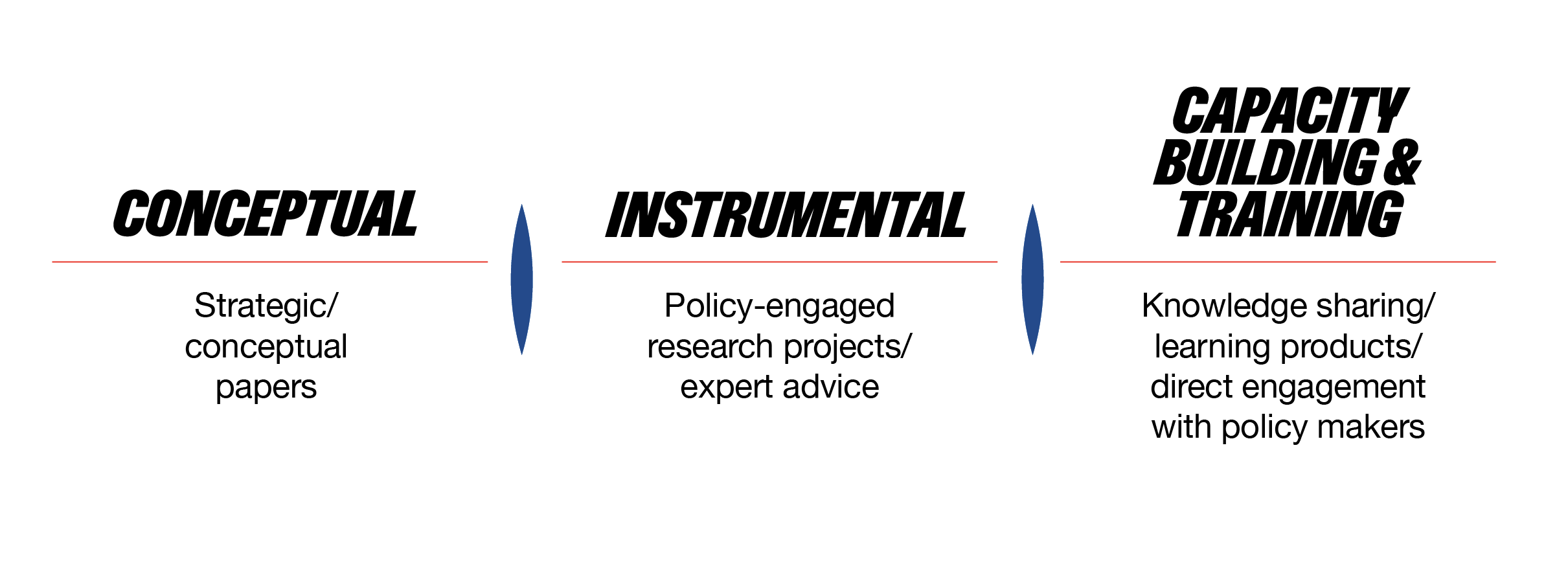
ENHANCING KNOWLEDGE, SHAPING POLICY, SUPPORTING PRACTITIONERS
GETTING STARTED
Not sure where to start? These three papers provide a good introduction to the overall SOC ACE approach.
POLITICAL
WILL
Moving from ‘political won’t to political will’ for more feasible interventions to tackle serious organised crime and corruption, Heather Marquette (SOC ACE Briefing Note BN1)
PEACEFUL, OPEN & INCLUSIVE POLITICS
Why incorporating organised crime into analysis of elite bargains and political settlements matters: understanding prospects for more peaceful, open and inclusive politics, Alina Rocha Menocal (SOC ACE Research paper RP15 and Briefing Note BN21)
The challenges of responding to IFFs where political will is absent, Tuesday Reitano (SOC ACE Research Paper RP14 and Briefing Note BN20)
ILLICIT FINANCE & “POLITICAL WON’T”
OUR TEAM
-
SOC ACE Director
Professor Heather Marquette is the Director of the Serious Organised Crime & Anti-Corruption Evidence (SOC ACE) research programme and Professor of Development Politics in the International Development Department at the University of Birmingham. Heather is an Expert Member of the Global Initiative Against Transnational Organised Crime’s expert network, a member of the RUSI State Threats Task Force, and a Lead Advisor and founding member of the global Thinking & Working Politically Community of Practice. Her research, which has been funded by the British Academy/Global Challenges Research Fund, DFID/FCDO, DFAT and the EU, focuses on transnational threats, particularly corruption and organised crime, as well as aid and foreign policy, governance and political analysis.
-
SOC ACE Programme Manager
Helen has overall responsibility for managing the delivery of the SOC ACE programme.
Helen has previously managed a DFID a funded consortium on health systems in fragile states led by the Liverpool School of Tropical Medicine and has managed EU funded programmes on health systems. She has extensive experience of managing international partnerships in higher education gained at the University of Liverpool and has a background in public health research, health economics and marketing.
Email h.m.carlin@birmingham.ac.uk
-
SOC ACE Project and Finance Officer
Nik assists in the management of the programme, with particular focus on financial management. Nik liaises closely with partners and supports the Programme Manager in preparing reports for the funder.
Prior to joining the SOC ACE team, Nik worked in the School of Social Policy at the University of Birmingham. She has held various positions in addition to volunteering for charities such as Citizens Advice and Teaching Adults GCSE and Level 2 Maths. She has a background in engineering and the medical and biomedical field with research experience in implants and replacements, fracture fixation, and restoration.
-
SOC ACE Programme Officer
Sarah is an experienced management professional with a Masters in International Development from the University of Birmingham. She brings over a decade of diverse experience in the health and wider public sector, both in the UK and internationally. Sarah has managed and supported projects across Africa through her roles at the Royal College of Physicians, London School of Hygiene and Tropical Medicine and Options Consultancy Services, including in clinical training, maternal and reproductive health and vaccine development. More recently Sarah has worked at Deloitte where she contributed to high-impact public sector programmes including on local government cost reduction, NHS organisational development, and Covid-19 programme management. This experience deepened her expertise in stakeholder engagement and financial management while further strengthening her skills in strategic planning, research and data analysis.
-
SOC ACE Senior Communications Officer
Richard has more than 30 years’ experience in journalism, public relations, and political campaigning. He holds a PhD in public relations and political protest, and has served as university lecturer and researcher at a number of HE institutions. His own research interests include the impact of public relations on political discourse, and the role of public relations as an enabler of serious organised crime. At SOC ACE he supports researchers in gaining impact for their work, devising and implementing communications and engagement campaigns.
-
SOC ACE Administrative Assistant
Hannah has extensive administrative and events experience having worked in the charity sector, at a students union and at The University of Sheffield in various administrative roles, supporting a variety of research programs and putting together grant applications. She has a BA in English Literature and an MA in Nineteenth century studies from the University of Sheffield. Her main area of interest in her studies and previous roles was centred around health care and the humanities.
-
Senior SOC ACE Associate
Olivia Allison is a Senior Associate Fellow at the Royal United Services Institute's Centre for Finance and Security (RUSI CFS) and co-founder of SECTA Research Ltd. She works on illicit finance and the role of trade and logistics in supporting armed conflict, with a particular focus on Russia and the war in Ukraine. Her current work includes research on Russia’s economic system, Russian threat actors and networks visible in open-source and commercial data, and governance and reform issues in Ukraine. She also advises private-sector clients on Ukraine-related issues through a political risk consultancy. Previously, she spent ten years at KPMG, including roles in Moscow and Kyiv, where she led major corruption-related investigations in Ukrainian state-owned enterprises. She continues to undertake research and policy engagement related to Ukraine and the wider region.
-
Senior SOC ACE Associate
Matthew Redhead is a Senior Associate Fellow at the Royal United Services Institute's Centre for Finance and Security (RUSI CFS). His research focuses on state, hybrid and greyzone threats, anti-money laundering and counter-terrorist financing (AML/CTF), sanctions evasion, terrorist financing, financial crime, organised crime, and the malign use of emerging technologies. He also advises organisations in the fintech and regtech sectors on AML/CTF effectiveness. His previous experience spans government, financial services, and management consulting, including roles at the UK Ministry of Defence, UK Home Office, HSBC, PwC, Matrix Knowledge Group, and Fintrail. He holds a first class degree in Modern History from the University of St Andrews, and masters degrees in Reformation Studies, Modern History and War Studies from St Andrews, Oriel College, Oxford, and King's College, London.
-
Senior SOC ACE Associate
Tom Rodwell is an independent researcher and policy specialist focusing on conflict, stabilisation, organised crime, and security policy. He recently completed ten years with the Foreign, Commonwealth & Development Office (FCDO), including service in the Stabilisation Unit, following earlier roles in the Ministry of Defence, Defence Intelligence, and Military Intelligence. During his government career, he led and contributed to major UK stabilisation initiatives, including as one of the lead commissioners on the Elite Bargains and Political Deals project and was lead author of the 2018 UK Guide to Stabilisation, as well as its subsequent refresh. Prior to entering government service, he worked in the financial sector as a risk analyst and investment manager specialising in emerging markets, and he also served in the British Army, in both the Regular Army and the (former) Territorial Army. Tom holds a BA in History from University College London and an MA in Conflict, Security and Development from King’s College London.
AFFILIATED ORGANISATIONS