
PUBLICATIONS
Addressing police and military involvement in serious and organised crime
In Addressing police and military involvement in serious and organised crime Liam O’Shea, Louis-Alexandre Berg, Alexander Kupatadze and Lucia Tiscornia present compelling comparative studies from Colombia, Georgia, and South Africa. They highlight how political will, institutional control, and prosecutorial strength are key to curbing security forces’ involvement with organised crime. The authors propose politically grounded strategies over technical fixes for sustainable, integrity-driven reform.
Dr Liam O’Shea (RUSI)
Dr Louis-Alexandre Berg (Georgia State University)
Dr Alexander Kupatadze (Kings College London)
Dr Lucia Tiscornia (University College Dublin)
December 2025
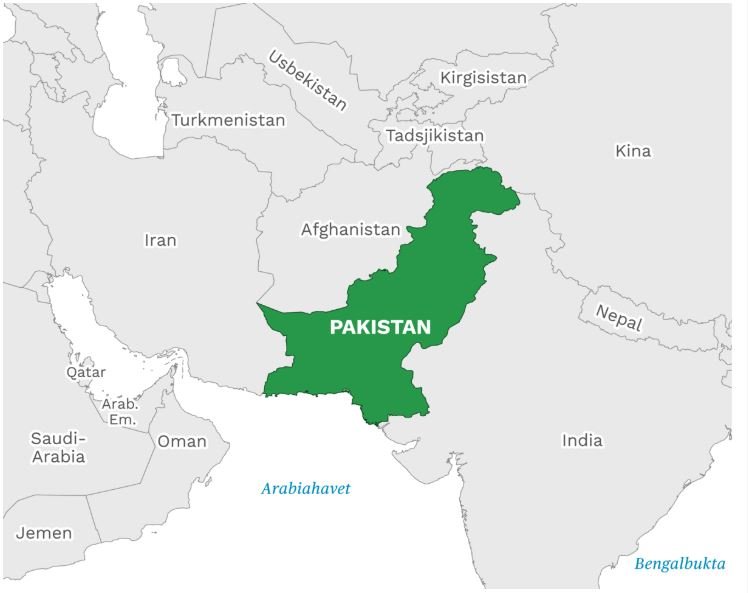
Conceptualising the interplay of corruption and an informal security welfare regime: Pakistan case study
Investigating the complex relationship between corruption and informal security welfare regimes, using Pakistan as a case study. The study reveals that corruption plays a dual role: it undermines formal welfare provision while simultaneously acting as a survival mechanism for those excluded from official support.
Dr Zahid Mumtaz (Australian National University)
Dr Caryn Peiffer (University of Bristol)
November 2025

Flying money, hidden threat: Understanding the growth of Chinese Money Laundering Organisations
In this research paper, Kathryn Westmore examines the rapid development of Chinese Money Laundering Organisations (CMLOs), describing their history and expansion in the West. She analyses them within a state threats framework and discusses the policy implications.
Kathryn Westmore (RUSI)
November 2025

Women and Illicit Finance in Russia’s Occupation of Ukraine
This research paper takes a gendered view of Russia’s use of illicit financial flows (IFF) in occupied Ukraine, by examining the role of women as both victims and perpetrators. The paper sheds light on the overlooked role that women are playing, be that - implementing corrupt policies, acting as proxies, or surviving under duress - while facing systemic harm, coercion, and prosecution amid gendered norms.
Dr Orly Stern
Olivia Allison (University of Exeter)
October 2025

Looting Mariupol: Russia’s use of illicit finance and economic crime in occupied Ukraine
Who benefits from Russia's occupation of Ukraine? Russia's economic activities in the occupied territories are characterised by widespread corruption and profiteering off billions spent without accountability and illicit seizures of Ukrainian businesses, many of which may be war crimes. These activities create new networks and bolster vested interests, often linked to Russian security services.
Olivia Allison, David Lewis
May 2025

Total Peace Policy: Between light and shadow: A framework to analyse Colombia’s comprehensive peacebuilding policy
Contrary to initial expectations, Colombia’s Total Peace Policy have not progressed as quickly or effectively as anticipated, leading to the unintended consequence of increasing armed and criminal groups capacity to govern the territories involved in negotiations, prompting some to think the policy is strengthening both rebels and criminals. This new research paper explores the argument and demonstrates that this trajectory is not generic: it depends on the armed and criminal actors, and the specific areas and the populations involved. Through comparison of negotiations’ in three regions, the paper explores not only which aspects of life are governed, but also how they are governed.
Kyle Johnson, Felipe Botero, Mariana Botero, Andrés F. Aponte, and Lina M. Asprilla.
March 2025

Institutional architecture of Total Peace: A normative review studied in practice
This new research paper explores the institutional architecture of Colombia’s Total Peace Policy, (“Paz Total”) answering two key questions: 1) what is the Policy’s institutional context, and 2) how is it being implemented by the negotiating groups. The research examines implications of the Policy’s degree of centralisation, as well as the expectations and actual involvement of local authorities and the robustness of it’s legal framework.
Juanita Durán
March 2025

Old Wine, New Bottles? The Challenge of State Threats
From the combination of traditional intelligence tradecraft with new technologies, attempts to innovate, a willingness to take greater risks, and a growing willingness to contract out activities to both licit and illicit non-state actors – especially organised crime groups, this research shows there is much that is new about the rising tide of hostile activities perpetrated by state actors and their partners; state threats.
This paper offers firmer definitional boundaries of state threats, and within them, explores the scale, scope and characteristics of their modern manifestation, especially - but not exclusively - from a Western perspective. It shows that many hostile activities are taking advantage of the new vulnerabilities in society, such as social media and societal reliance on technology, and that state threats have become more important as tools of policy due to “geopolitical climate change”, including perceived changes in global power balances and receding agreement on international norms of behaviour.
The paper concludes that whilst evidence suggests the results of these kinds of activities are mixed, they remain an attractive form of coercive statecraft in the medium term, and that if sustained over the long term, could have more severe effects on open societies that have robust protections in place.
Matthew Redhead (RUSI)
January 2025

The Role of Financial Rewards for Whistleblowers in the Fight Against Economic Crime
This paper evaluates the evidence on the use of reward programmes for whistleblowers who report economic crimes, evaluating it against the key concerns in the debate surrounding the implementation of such schemes. It offers four observations for policymakers considering use of whistleblower rewards programmes in the fight against economic crime.
Eliza Lockhart
December 2024

Coercive Brokerage: Paramilitaries, Illicit Economies and Organised Crime in the Frontiers of Afghanistan, Colombia and Myanmar - Working Paper II
This paper is the second of a three-part series exploring the nexus between paramilitaries, illicit economies and organised crime. This research paper examines the nexus between paramilitaries, illicit economies and organised crime in frontier regions, through detailed case study analysis of these phenomena in the borderlands of Afghanistan, Myanmar and Colombia.
Prof Jonathan Goodhand, Dr Patrick Meehan, Camilo Acero & Jan Koehler
January 2024

Opioid Market Trends in Afghanistan: Poppy Cultivation, Policy and Practice Under the New Regime
This research paper set out to capture the implications of the Taliban’s return to power in Afghanistan in August 2021 for the local realities of the opium trade and the diverse actors whose lives are entangled in the country’s pervasive drug economy. Focusing on a narrowly defined geography and period, the paper navigates the uncertainty that was omnipresent following the announcement of the Taliban’s opium ban in the two important localities for the country’s opium economy: Helmand – the source of more than half of Afghan opium before the April 2022 ban took effect – and Nangarhar, the key opium-producing province in the eastern part of the country.
Prem Mahadevan, Maria Khoruk, Alla Mohammad Mohmandzai & Ruggero Scaturro
January 2024

Coercive Brokerage: The Paramilitary-Organized Crime Nexus in Borderlands and Frontiers Working Paper I
This paper is the first of a three-part series exploring the nexus between paramilitaries, illicit economies and organised crime. It advances a conceptual framework for analysing the nexus between paramilitaries, illicit economies and organised crime in borderland and frontier regions.
Dr Patrick Meehan & Professor Jonathan Goodhand
January 2024

Lost in Transition: Gold Mining and the Political Economy of Takhar, Afghanistan
This paper examines the emerging dynamics, risks and opportunities within Afghanistan from the perspective of the gold mining industry in the north-eastern province of Takhar. While Afghanistan has relatively small value deposits compared with other resources, insights into the evolution of political economies surrounding the gold sector, its role in the economy and foreign intervention, shed light on broader dynamics of the extractives industry in the country.
Marcena Hunter & Alastair MacBeath
December 2023

The impact of Afghanistan’s drug trade on its neighbours: the case of Pakistan, Iran and Tajikistan
This research examines the impact of Afghanistan’s drug trade on the country’s neighbours, with a particular focus on the three countries, Pakistan, Iran, and Tajikistan, which account for the highest volumes of narcotics that transit from Afghanistan. It explores policy options in the post-August 2021 context and considers the prospects of and challenges to greater regional cooperation.
Shehryar Fazli
November 2023

A New Exodus: Migrant smuggling from Afghanistan after the return of the Taliban
Kabul's fall to the Taliban in August 2021 spurred the fourth wave of distress migration from Afghanistan in 50 years. This research uncovers common patterns in Afghan migration and the impact of the Taliban's return on human mobility. It draws on interviews with migrants, smugglers, and financiers, revealing an entrenched illicit economy essential to Afghanistan and beyond. This study aims to analyse post-Kabul human mobility; and investigate the role of informal value transfer systems (IVTS) in clandestine migration.
Prem Mahadevan, Maria Khoruk, and Alla Mohamad Mohmandzaï
November 2023

Information Manipulation and Organised Crime: Examining the Nexus
In recent years, concerns over information manipulation have grown, particularly the disinformation tactics employed by authoritarian regimes. Yet, the role of non-state actors, specifically organised crime (OC) groups, in shaping information landscapes remains overlooked. Drawing from Nicholas Barnes' 'political criminality' concept, this paper investigates the complex connections between criminal actors and the state. The research spans various regions, with a strong focus on Eastern Europe, including Ukraine, Russia, Moldova (Transnistria), and Albania.
Dr Tena Prelec
October 2023

Illuminating the Role of Third-Country Jurisdictions in Sanctions Evasion and Avoidance (SEA)
Sanctions are a crucial tool for exerting influence internationally yet understanding of the impact of sanctions evasion or avoidance (SEA) and third-country involvement is limited. This report reveals that third countries are more likely to engage in SEA when they have trade and commercial capacity, particularly in professional advisory, financial services, shipping and logistics sectors. Private commercial actors within these sectors, with an economic interest in engaging in SEA may find opportunity to do so.
Dr Liam O’Shea, Olivia Allison, Gonzalo Saiz & Alexia Anna Hack
October 2023

Economic Crime and Illicit Finance in Russia’s Occupation Regime in Ukraine
This paper details Russia's illicit economic activity in the occupied territories in Ukraine and calls for more international attention to this aspect of Russia's invasion. The report shows that since Russia occupied large parts of south-eastern Ukraine in March 2022, it has worked rapidly to incorporate these regions into Russia's economic and financial system. These activities were all illegal under Ukrainian law and some may constitute potential war crimes under international law.
Professor David Lewis
September 2023

A Framework for countering organised crime: strategy, planning and the lessons of Irregular Warfare
This paper presents the ‘Framework of Analysis and Action’, originally designed for irregular warfare challenges, as an analytical framework to aid the assessment of and response to, organised crime. The framework builds on an instructional method long used within the College of International Security Affairs (CISA), at the U.S. National Defense University, to prepare practitioners for insurgency, terrorism, and state-based subversion. This report offers an adapted framework to help those charged with responding to organised crime with their analysis and planning.
Dr David Ucko & Dr Thomas Marks
September 2023

Under the Radar: How Russia Outmanoeuvres Western Sanctions with Help from its Neighbours
This paper examines the practices used to evade sanctions imposed on Russia after its invasion of Ukraine in 2022, focusing on the import–export operations of Russia, Belarus, Georgia, and Kazakhstan. The research finds that sanctions have not cut supplies to Russia but have instead empowered informal trade networks and intermediaries. Georgia and Kazakhstan have indirectly benefited from the increased transiting trade; however, the impact on the shadow economy and traditional organised crime has been minimal because sanctions-busting is not illegal in these countries.
Dr Erica Marat & Dr Alexander Kupatadze
August 2023