

PUBLICATIONS

Addressing the Paramilitary–Organised Crime Nexus in War-to-Peace Transitions: A Framework for Policymakers
The paramilitary–organised crime nexus represents a persistent and under-addressed challenge in war-to-peace transitions. Paramilitaries are not residual actors that fade away with the end of large-scale conflict; rather, they often adapt, entrench themselves in criminalised peace economies, and continue to shape governance, security and livelihoods at local, national and transnational levels. Policy responses that treat paramilitaries as either purely criminal actors or temporary security partners risk misunderstanding their durability, social embeddedness and political significance.
This Briefing Note provides a typology for assessing policy responses to the paramilitary-organised crime nexus and sets out guidance on how to strengthen understanding of and engagement with the nexus for improved policy outcomes.
Prof. Jonathan Goodhand (SOAS, University of London)
Dr Patrick Meehan (University of Manchester)
June 2026
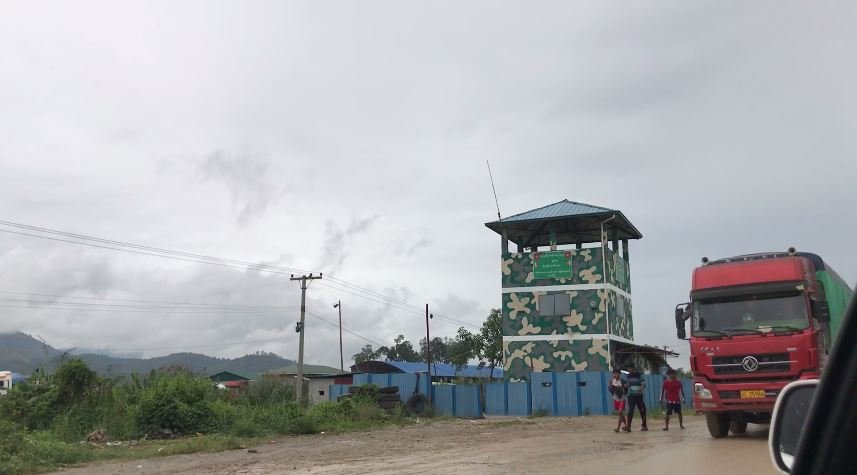
Case Study: Myanmar: The Paramilitary‑Organised Crime Nexus in Myanmar’s Borderlands
This Case Study argues that militias and border guard forces in Myanmar are not simply criminal actors but deeply embedded components of the Myanmar military’s wider system of borderland governance. The paper highlights how this paramilitary–organised crime nexus has expanded in Myanmar’s borderlands, especially since the 2021 coup, explaining why responses have had limited impact. Implications are that durable solutions for cannot rely on the Myanmar military to dismantle its own allies, and instead responses must recognise the structural role of militias, focus on financial and criminal networks, mitigate harms and engage seriously with the opportunities and limitations of working with regional powers.
Dr Patrick Meehan (University of Manchester)
July 2026