
PUBLICATIONS

Addressing police and military involvement in serious and organised crime
In Addressing police and military involvement in serious and organised crime Liam O’Shea, Louis-Alexandre Berg, Alexander Kupatadze and Lucia Tiscornia present compelling comparative studies from Colombia, Georgia, and South Africa. They highlight how political will, institutional control, and prosecutorial strength are key to curbing security forces’ involvement with organised crime. The authors propose politically grounded strategies over technical fixes for sustainable, integrity-driven reform.
Dr Liam O’Shea (RUSI)
Dr Louis-Alexandre Berg (Georgia State University)
Dr Alexander Kupatadze (Kings College London)
Dr Lucia Tiscornia (University College Dublin)
December 2025
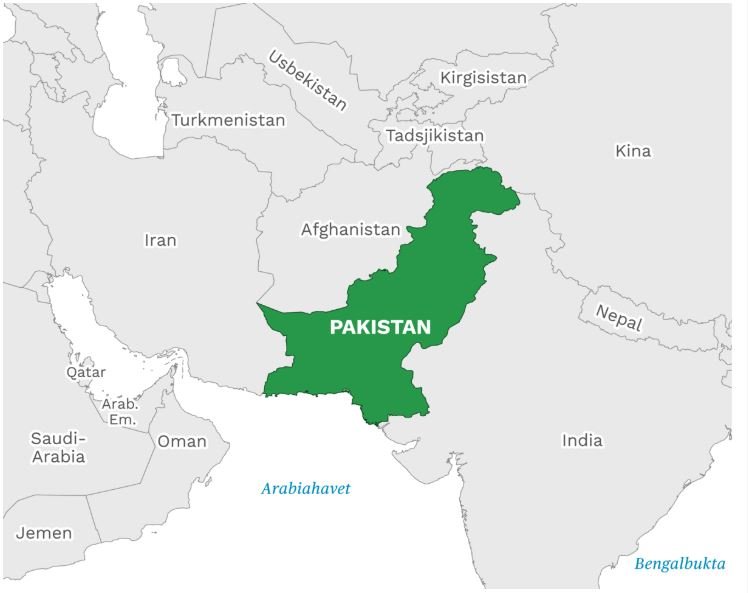
Conceptualising the interplay of corruption and an informal security welfare regime: Pakistan case study
Investigating the complex relationship between corruption and informal security welfare regimes, using Pakistan as a case study. The study reveals that corruption plays a dual role: it undermines formal welfare provision while simultaneously acting as a survival mechanism for those excluded from official support.
Dr Zahid Mumtaz (Australian National University)
Dr Caryn Peiffer (University of Bristol)
November 2025
A Framework for Countering Organized Crime: Strategy, Planning, and the Lessons of Irregular Warfare
States continue to struggle in their efforts to counter organised crime, with it proving too adaptable and too resilient to be seriously affected. This monograph it applies an “irregular warfare” lens to the problem of organised crime, helping to situate the divergent criminal activity within its crucial political context. It goes on to propose ‘A Framework for Analysis and Action’, adapted from a framework for tackling irregular warfare, to guide the analysis and planning of those who are charged with responding to the challenge of organised crime.
David H Ucko & Thomas A. Marks
(NDU Press)
July 2025

Institutional architecture of Total Peace: A normative review studied in practice
This new research paper explores the institutional architecture of Colombia’s Total Peace Policy, (“Paz Total”) answering two key questions: 1) what is the Policy’s institutional context, and 2) how is it being implemented by the negotiating groups. The research examines implications of the Policy’s degree of centralisation, as well as the expectations and actual involvement of local authorities and the robustness of it’s legal framework.
Juanita Durán
March 2025
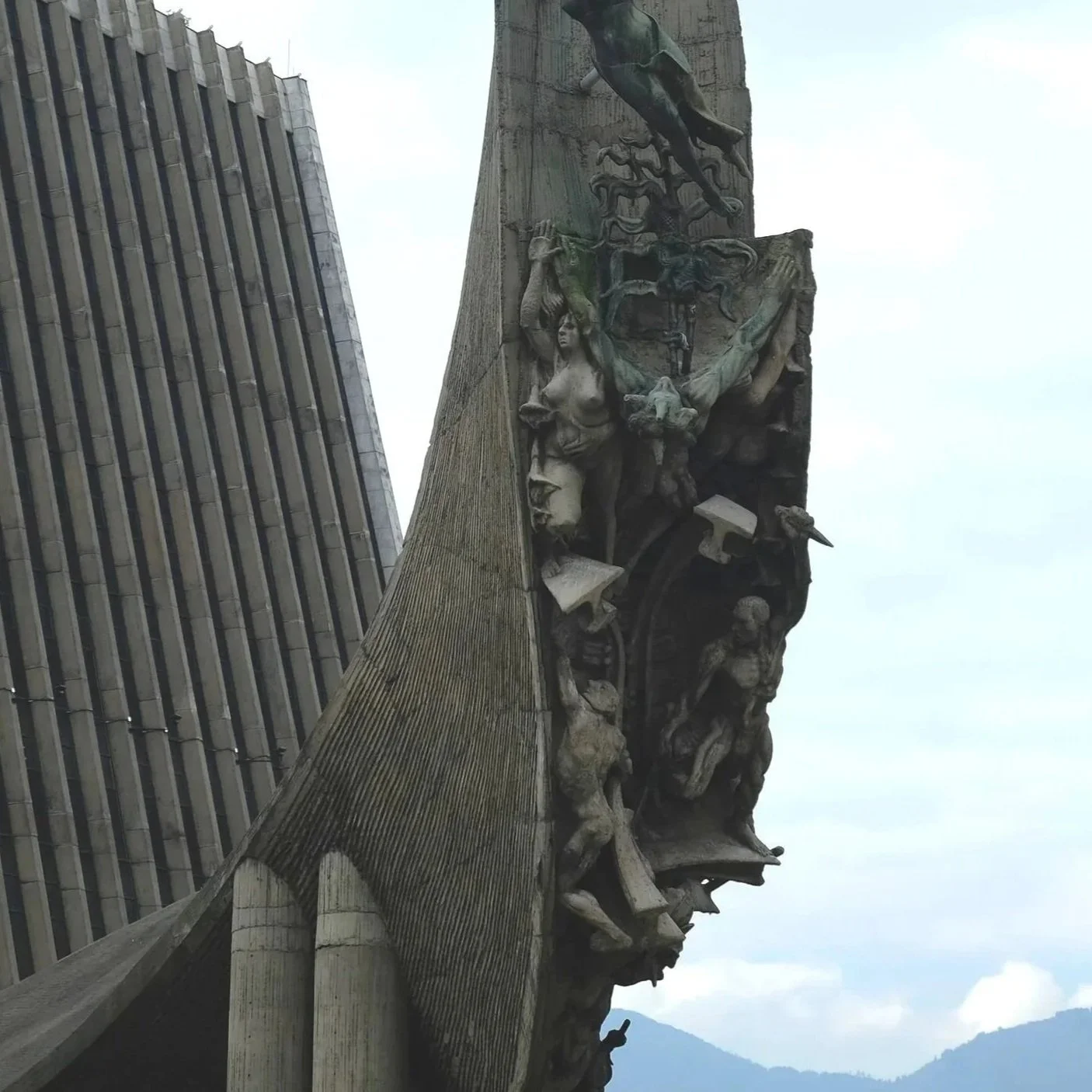
Negotiating with Criminal Groups: Colombia’s “Total Peace”
Drawing on the findings of two new research papers from the SOC ACE research project, “Negotiating with Criminal Groups: Colombia’s Total Peace”, this briefing note summarises lessons for negotiating with criminal groups found through fieldwork in three regions of Colombia – Buenaventura, Arauca and Tumaco. The note focuses on two critical issues that emerge in contexts where rebel and criminal governance coexist with formal institutions.
Felipe Botero, Juanita Durán, Kyle Johnson, Mariana Botero, Andrés F. Aponte, Lina M. Asprilla.
March 2025

The Political Will to Measure Organised Crime: Why we need it and how to build it
This briefing note offers insights on how novel approaches to measuring less visible organised crime activities such as extortion, and using the data to inform better diagnostic of the problem and develop more effective response interventions, can support the building of political will to tackle organised crime. The briefing note draws on the work done by the research team as part of Medellín Impact Lab, demonstrating how new data on extortion has led to increased political will to address the issue in the city, and Colombia more widely.
Professor Christopher Blattman, Dr Benjamin Lessing, Professor Santiago Tobón
January 2025

How to Map and Combat Urban Organised Crime: Lessons from the Medellín Impact Lab
This briefing note provides insights on how novel approaches to measurement of less visible organised crime activities such as extortion, can be used to better diagnose problems and develop, test and iterate more effective response interventions. It offers an overview of how new data on extortion has been utilised as part of a cross-sector, collaborative Impact Lab approach to tackle the pervasive issue of organised crime groups’ extortion in Medellin.
Professor Christopher Blattman, Dr Benjamin Lessing, Professor Santiago Tobón
January 2025
Addressing Organised Crime and Security Sector Reform and Governance: Linkages, processes, outcomes and challenges
This evidence review paper explores how security and justice institutions, organised crime, security sector reform and governance and counter-organised crime interventions influence and impact each other, positively and negatively.
Huma Haider
September 2024
Addressing Organised Crime and Security Sector Reform and Governance: Linkages, processes, outcomes and challenges
This briefing note summarises an evidence review paper exploring how security and justice institutions, organised crime, security sector reform and governance and counter-organised crime interventions influence and impact each other, positively and negatively.
Huma Haider
July 2024

Grupos del crimen organizado, agendas criminales, violencia y conflicto: Implicaciones en materia de participación, negociación y procesos de paz
Negociar con grupos de crimen organizado en procesos de paz es ahora una realidad práctica; sin embargo, la investigación sobre este tema sigue siendo limitada. Este documento aborda esta laguna revisando diversa literatura y resaltando la necesidad de un marco que vaya más allá de la confrontación, promoviendo la acomodación y una transformación social más amplia.
Huma Haider
Julio 2024

Coercive Brokerage: Paramilitaries, Illicit Economies and Organised Crime in the Frontiers of Afghanistan, Colombia and Myanmar - Working Paper II
This paper is the second of a three-part series exploring the nexus between paramilitaries, illicit economies and organised crime. This research paper examines the nexus between paramilitaries, illicit economies and organised crime in frontier regions, through detailed case study analysis of these phenomena in the borderlands of Afghanistan, Myanmar and Colombia.
Prof Jonathan Goodhand, Dr Patrick Meehan, Camilo Acero & Jan Koehler
January 2024

Militarised Approaches to Serious and Organised Crime: Approaches and Policy Implications
This annotated bibliography includes research and evidence on militarised approaches to combating serious and organised crime (SOC) in various contexts. Militarised approaches involve using military forces or methods to deter and disrupt SOC groups. These approaches have been employed in states facing high levels of violence, fragile and conflict-affected contexts, post-conflict settings, and against threats like piracy and wildlife crime.
Luke Kelly
December 2023
Organised crime groups, criminal agendas, violence and conflict: implications for engagement, negotiations and peace processes
Negotiating with organised crime groups and addressing criminal agendas in peace processes has become a reality in practice. There is, however, limited research on negotiating with criminal actors in peace processes. In seeking to address this gap, this paper reviews scholarly and practitioner literature across a wide range of research disciplines and demonstrates the importance of creating a framework for engaging with criminality and organised crime groups that extends beyond confrontation – allowing for accommodation and incorporating a wider societal change agenda through transformation.
Huma Haider
May 2023

State capture and serious organised crime in South Africa: a case study of the South African Revenue Service (2001-21)
State capture occurs when a small number of influential actors in the public and private sectors collude to change rules, regulations, legislation and institutions to further their own narrow interests at the expense of the broader public interest. In South Africa, there have been widespread allegations that several state-owned enterprises and other agencies were infiltrated by persons close to President Jacob Zuma and that they radically altered the processes and functions of these entities to serve the interests of a few individuals and companies linked to Zuma. This research examines how one institution, the South African Revenue Service (SARS), was captured and the detrimental impact of this on the capacity of SARS to detect, investigate and prevent tax and financial crimes. The literature on state capture generally does not provide detailed accounts of how specific institutions are captured or the impact on their capability and functioning; this research suggests that the further case studies may lead to improvements in our understanding of the scale of the impacts of state capture on institutions in the public sphere.
Zenobia Ismail & Robin Richards
March 2023

Human trafficking in Afghanistan: what hope for change?
Decades of wars, internal conflicts and political instability have driven millions of Afghan families into poverty and increased human suffering and vulnerabilities, eroded community resilience, and amplified human trafficking activities (and in several cases also created new forms of these practices). This chapter first provides a brief overview of the main trafficking forms, and their widespread reach and practices in the Afghan context, both before and after the Taliban’s takeover in August 2021. Second, it discusses the potential implications and impact of the new Afghan government, international actors and non-governmental organisations’ policies, intentions and perspectives for the multiple humanitarian crises in the country, especially for the development of ways to address human trafficking in particular. I argue for prioritising humanitarian assistance. Stakeholders need to pursue a pragmatic approach to responses and negotiations that puts human lives at its centre, to prevent worsening the humanitarian crises, exacerbating vulnerability to human trafficking, and causing further loss of life and other harms.
Thi Hoang
November 2022

Politics, uncertainty and interoperability challenges: the potential for sensemaking to improve multi-agency approaches
This scoping research looks at the potential for sensemaking for tackling challenges that arise when multi-agency teams are tasked with tackling the same problems – in this case, serious organised crime – but with unclear and potentially competing or conflicting mandates and incentives. We look at how sensemaking can help in better uncovering the ways in which different agencies approach the problem focusing on framing effects (e.g., assumptions, beliefs, desired consequences, expected risks and so on). We consider how this can lead to differences in consequences and potential for conflict and suggest an approach for improved multi-agency analysis and decision-making.
Chris Baber, Andrew Howes, James Knight & Heather Marquette
August 2022

Why incorporating organised crime into analysis of elite bargains and political settlements matters: understanding prospects for more peaceful, open and inclusive politics
This paper argues that political settlements analysis and an understanding of elite bargains need to incorporate a deeper and more systematic exploration of serious organised crime (SOC), since this affects critical elements related to the nature and quality of elite bargains and political settlements. In particular, the paper examines how SOC affects these issues – from the elites that constitute a bargain or settlement, to violence and stability, to ‘stateness’, or the extent to which a state is anchored in society, state capacity and political will, to legitimacy and electoral politics.
Alina Rocha Menocal
May 2022
Human trafficking in the Afghan context: caught between a rock and a hard place?
Decades of wars and internal conflicts have driven generations and millions of Afghan families into impoverishment, illiteracy, unemployment, and displacement, rendering them unable to provide for their household members, particularly children. Political instability and conflicts have increased human suffering and vulnerabilities, eroded community resilience, stripped people of legitimate and viable economic options, opportunities, and livelihoods, as well as amplifying (in several cases also creating new forms of) human trafficking activities and practices. Drawing on existing academic and grey literatures, expert interviews and media reports, this paper first provides a brief overview of human trafficking situations, forms, their widespread reach and practices in the Afghan context before and after the Taliban’s takeover in August 2021. Second, it discusses the potential implications and impact of various actors’ policies, intentions and perspectives both on the humanitarian crises in Afghanistan, and on human trafficking in particular.
Thi Hoang
May 2022

Transnational governance networks against grand corruption: cross-border cooperation among law enforcement
Fighting grand corruption requires transnational cooperation among law enforcement agencies, to be able to ‘follow the money’ on its typically complex route around the globe. This paper sheds light on how a certain group of substate actors – law enforcement agencies – have formed a coalition of the willing to cooperate among themselves and support non-member agencies in sharing intelligence to fight grand corruption. It studies one particular innovation in this area, the International Anti-Corruption Coordination Centre (IACCC), a unit set up following the 2016 London Anti-Corruption Summit with core funding from the UK government.
Elizabeth Dávid-Barrett & Slobodan Tomić
May 2022

The terrible trade-off: how the hidden cost of organised crime harms cities, and what can be done about it
Organised crime poses one of the greatest threats to national security and development in the 21st century. Despite this, most policy, data collection, and scholarly research focuses on individuals and disorganised violence. Our work addresses several critical gaps in knowledge in the context of Medellín, Colombia’s second largest and most important city.
Christopher Blattman, Benjamin Lessing & Santiago Tobón
May 2022