
PUBLICATIONS

When organised crime becomes an atrocity crime: Adopting a transitional justice framework
This paper argues that when organised crime crosses into atrocity crimes or contributes to its commission, transitional justice can complement traditional law enforcement. Drawing on international examples, it highlights victim-centred approaches, truth-telling, reparations, and pattern-based investigations, while acknowledging challenges such as political resistance, overlapping mandates, and balancing justice with counter-organised crime efforts.
Huma Haider (Ind.)
July 2026
Paramilitaries and Organised Crime in War-to-Peace Transitions: Policy Challenges and Responses
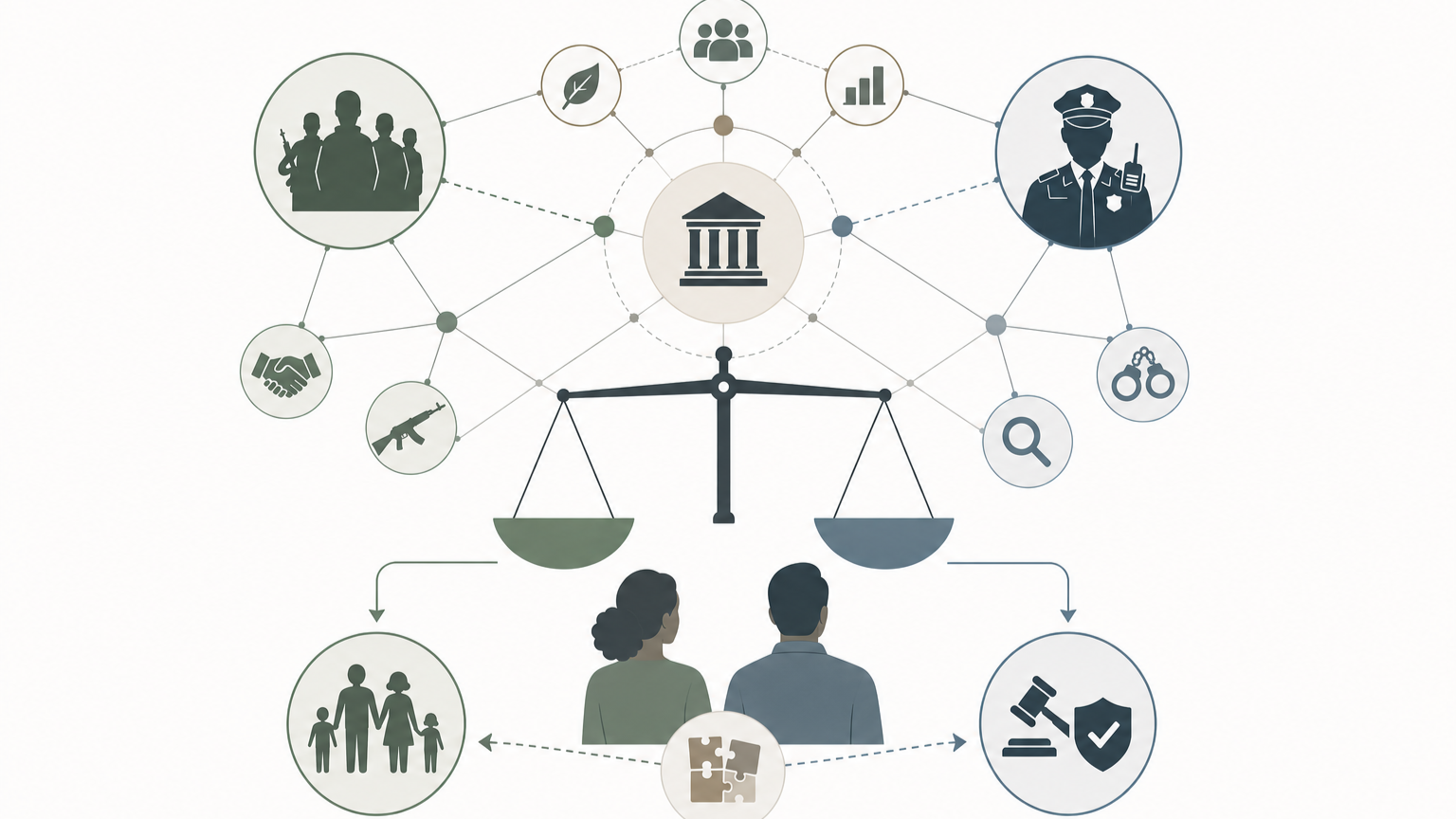
This research paper examines how policymakers have addressed the relationship between paramilitary groups and organised crime in societies transitioning from war to peace. It argues that policymakers have responded through a spectrum of approaches and goes on to outline some of the major policy challenges and lessons associated with them, including political fragmentation, perverse incentives and policy siloes. It concludes with recommendations for mitigating these challenges.
Prof Jonathan Goodhand (SOAS)
Dr Kota Watanabe (NYU Wagner)
Dr Patrick Meehan (University of Manchester)
June 2026

Addressing the Paramilitary–Organised Crime Nexus in War-to-Peace Transitions: A Framework for Policymakers
The paramilitary–organised crime nexus represents a persistent and under-addressed challenge in war-to-peace transitions. Paramilitaries are not residual actors that fade away with the end of large-scale conflict; rather, they often adapt, entrench themselves in criminalised peace economies, and continue to shape governance, security and livelihoods at local, national and transnational levels. Policy responses that treat paramilitaries as either purely criminal actors or temporary security partners risk misunderstanding their durability, social embeddedness and political significance.
This Briefing Note provides a typology for assessing policy responses to the paramilitary-organised crime nexus and sets out guidance on how to strengthen understanding of and engagement with the nexus for improved policy outcomes.
Prof. Jonathan Goodhand (SOAS, University of London)
Dr Patrick Meehan (University of Manchester)
June 2026
Addressing the Paramilitary–Organised Crime Nexus in War-to-Peace Transitions: Implications for Supporting Peace Processes
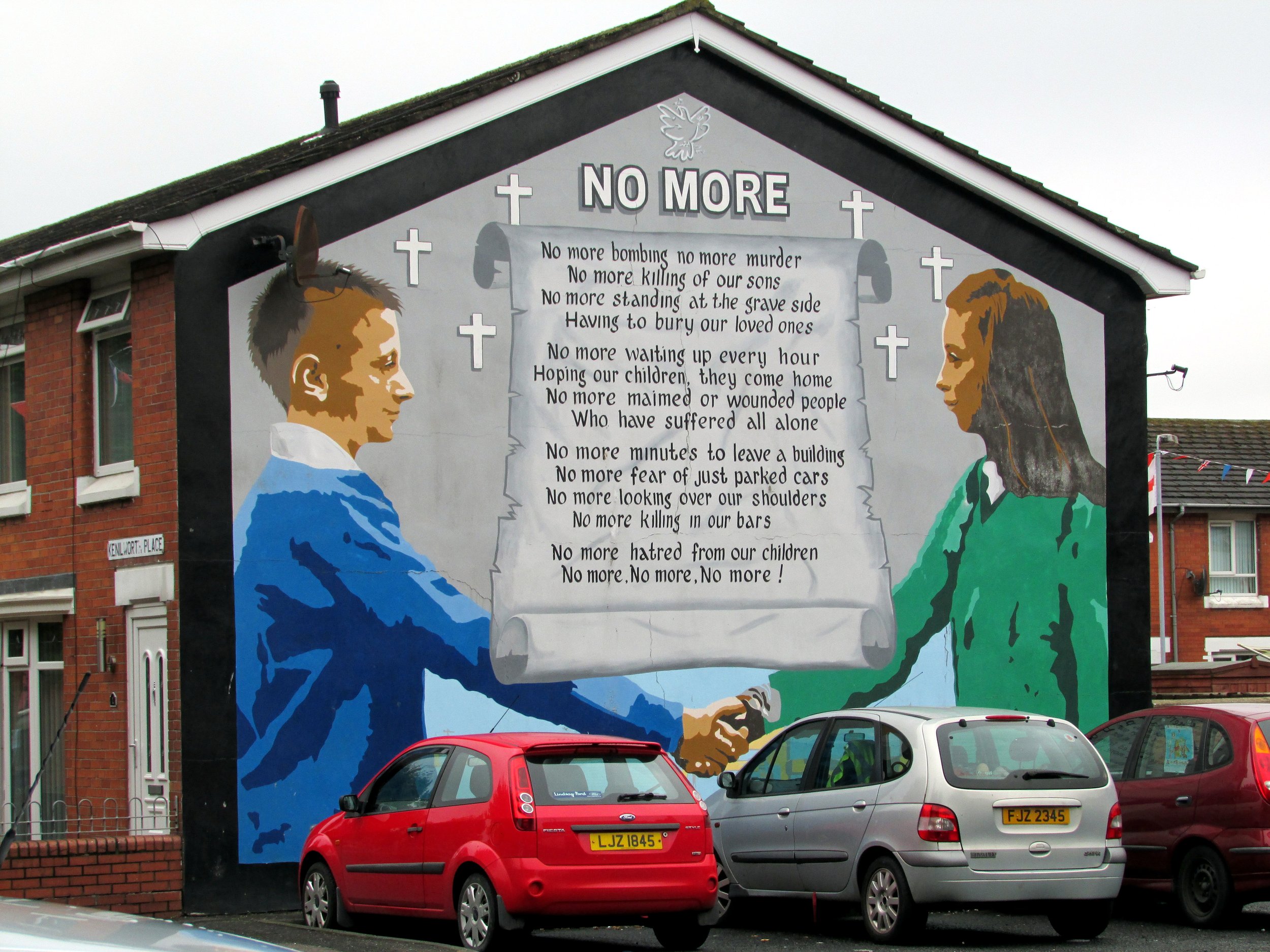
This Briefing Note examines how the paramilitary-organised crime nexus shapes war-to-peace transitions. It recognises that paramilitaries often retain significant autonomy, economic power, and transnational connections and that their exclusion or mismanagement in peace-processes can create veto players, entrench violence and undermine post-war governance. The researchers calls for policymakers to analyse the ‘holding power’ of paramilitaries, including their economic networks, local embeddedness and external backers, with their inclusion in negotiations conditional, realistic and enforceable, linked to disarmament, justice and development strategies, and calibrated to paramilitary structures and state capacity.
Prof Jonathan Goodhand (SOAS, University of London)
Dr Patrick Meehan (University of Manchester)
June 2026
Photo credit: Tom Bastin

Addressing the Paramilitary–Organised Crime Nexus in War-To-Peace Transitions: Implications for Disarmament, Demobilisation and Reintegration and Security Sector Reform Programmes
This Briefing Note examines policy implications of the paramilitary–organised crime nexus for disarmament, demobilisation and reintegration (DDR) and security sector reform (SSR) programmes in post-war transitions. Paramilitaries’ close ties to state institutions, political elites and illicit economies mean they are frequently shielded from accountability and excluded from disarmament processes designed for rebel groups. It show how different policy approaches shape DDR/SSR outcomes and demonstrates that paramilitarism should be treated as a governance challenge , requiring governance responses and approaches that reduce arm while gradually reshaping the security environment.
Prof Jonathan Goodhand (SOAS, University of London)
Dr Patrick Meehan (University of Manchester)
June 2026

Addressing the Paramilitary–Organised Crime Nexus in War-to-Peace Transitions: Implications for Development Programmes
Paramilitary–organised crime networks frequently persist after peace agreements, and disarmament, demobilisation and reintegration (DDR) and security sector reform (SSR) processes, requiring development actors to adopt long-term, conflict‑sensitive approaches rather than assuming that stabilisation efforts alone will weaken these systems.
This Briefing Note draws out five implications, that development programming must be, 1) conflict-sensitive and attentive to distributional impacts, 2) invest in harm reduction and community level violence-mitigation, 3) create systemic pathways out of paramilitarism, 4) integrate marginalised regions and communities, and 5) tackle the gendered structures of criminalised local orders.
Prof Jonathan Goodhand (SOAS, University of London)
Dr Patrick Meehan (University of Manchester)
June 2026
Addressing the Paramilitary–Organised Crime Nexus in War-to-Peace Transitions: Implications for Addressing Organised Crime
Paramilitary actors engaged in organised crime pose distinctive challenges in war‑to‑peace transitions as their activities are deeply embedded in political, territorial and governance systems rather than being driven solely by profit. Their coercive power, links to elites and access to state protection allow them to consolidate control over illicit markets, reinforcing their political influence and undermining long‑term peacebuilding and state legitimacy. This Note demonstrates that response strategies should integrate organised crime analysis in to conflict and governance assessments, treat paramilitary criminality as a political problem, account for state complicity, patronage and incentives, and go beyond national borders.
Prof Jonathan Goodhand (SOAS, University of London)
Dr Patrick Meehan (University of Manchester)
June 2026
Photo credit: Diego Sideburns
Undertaking Political Economy Analysis of the Paramilitary–Organised Crime Nexus: Guidance for Policymakers
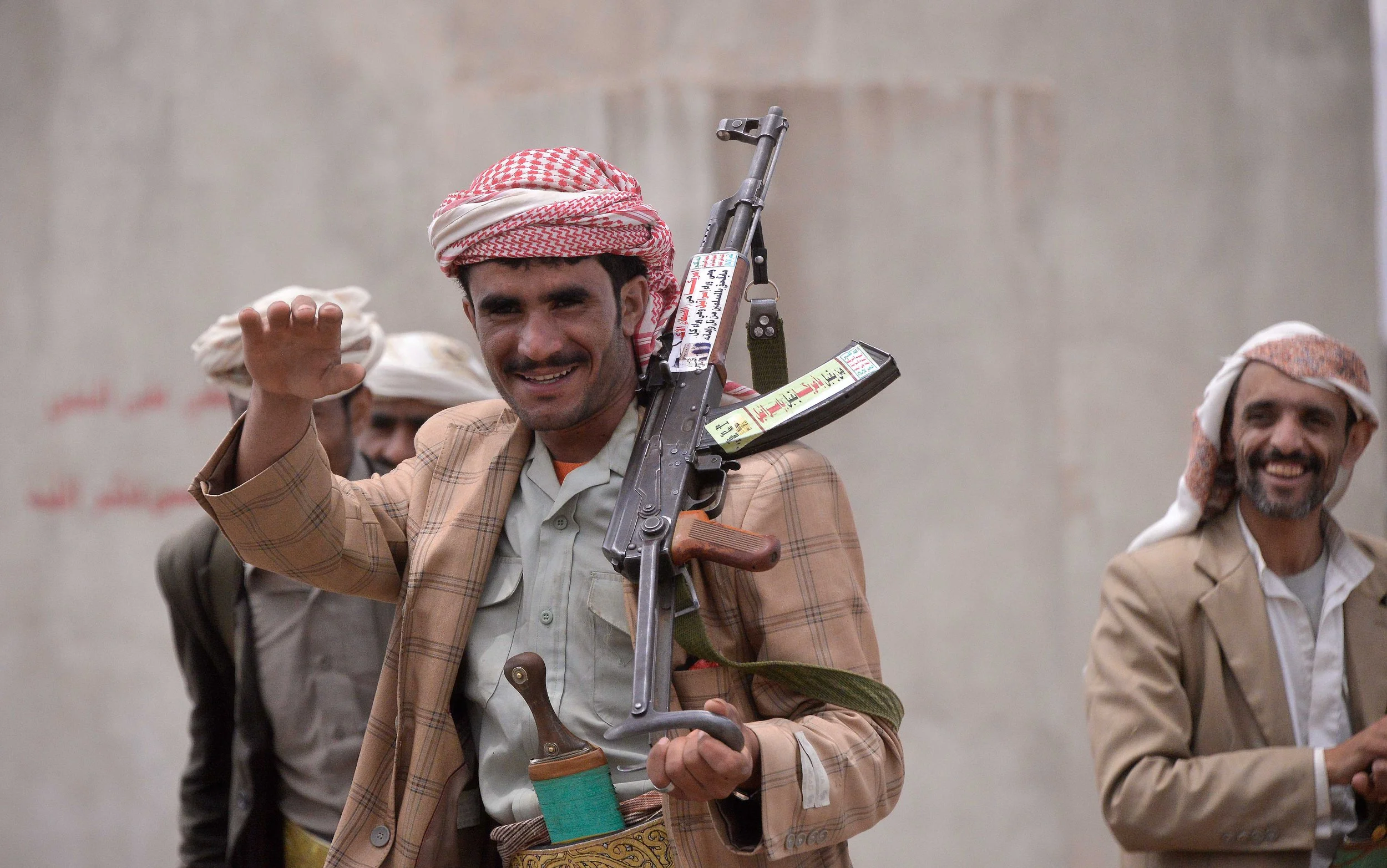
Paramilitary violence and organised crime are a growing and often connected phenomenon in many countries affected by state fragility and post-war transitions. Yet there is a major gap in understanding of and responses to addressing this relationship in peacebuilding and post-war efforts. This Briefing Note offers a diagnostic and planning tool that can be used to map key features of paramilitary actors, identify key the political and economic incentives sustaining their involvement in organised crime, and anticipate the likely consequences of different policy choices. This framework, designed to be flexible and adaptive across contexts, can help policymakers and practitioners to move beyond template responses towards strategies grounded in local power dynamics and political realities.
Prof Jonathan Goodhand (SOAS University of London)
Dr Patrick Meehan (University of Manchester)
June 2026
Photo credit: Rob Waddington
Case Study: Colombia: Political Negotiations with Paramilitary ‘Allies’
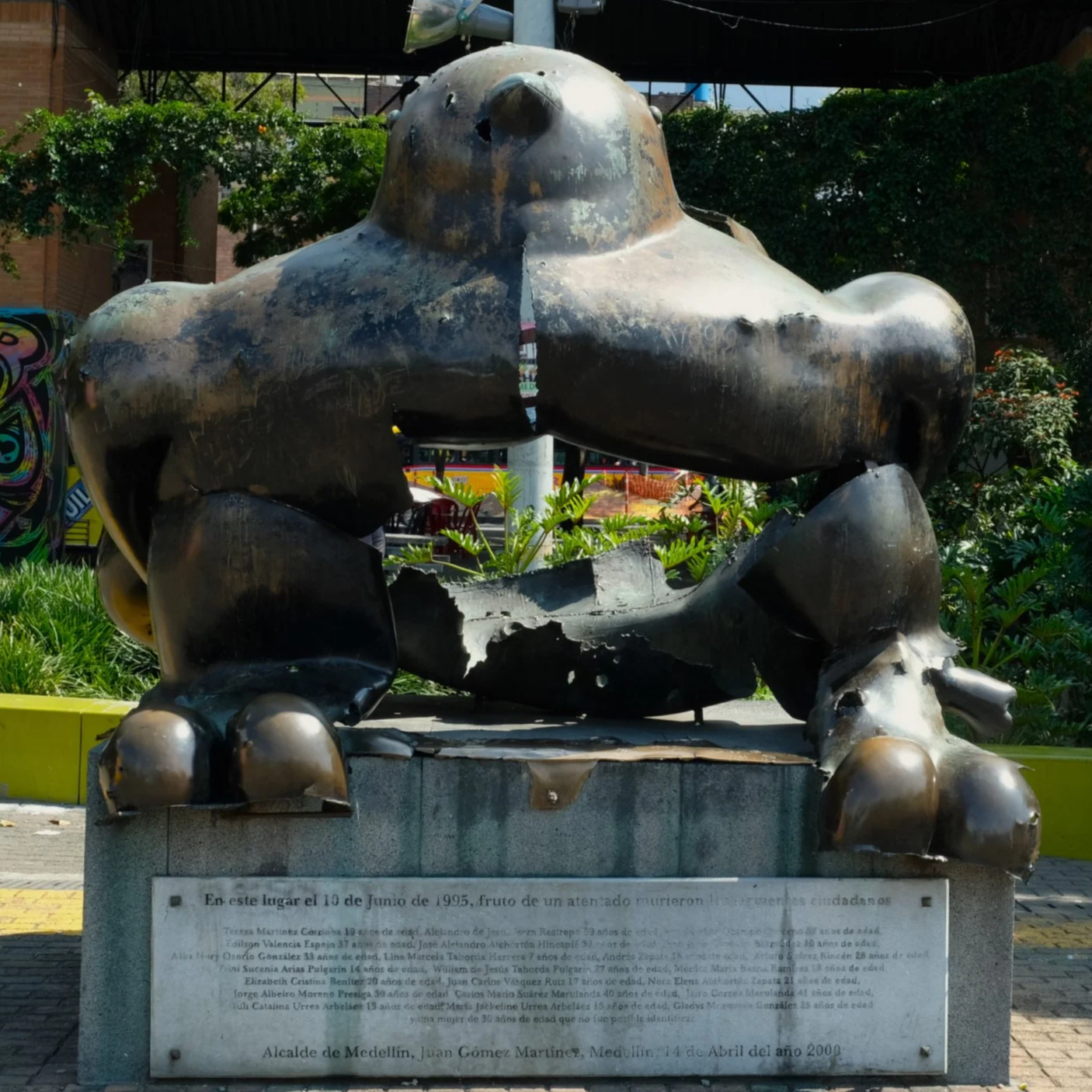
This Case Study argues that Colombia’s efforts to address paramilitarism have achieved only partial and temporary gains because policy focused too narrowly on demobilising fighters rather than dismantling the wider political, economic and governance structures that sustained paramilitary power. It highlights major weaknesses in the process, including weak action against paramilitary networks and assets, inadequate reintegration, and failure to address underlying structural drivers. Negotiations with paramilitary actors requires transparency, formal structures and accountability, whilst DDR programmes need to be combined with broader strategies to dismantle political-criminal networks, extend legitimate governance and create long-term economic alternatives.
Dr Andrew Thomson (Queen’s University)
June 2026

Case study: Northern Ireland: A ‘Public Health’ Approach to Addressing the Paramilitary–Organised Crime Nexus
This Case Study argues that Northern Ireland’s experience shows both the value and limits of treating paramilitarism as a wider social and developmental problem rather than only a policing issue. The paper examines the Northern Ireland Executive’s Tackling Paramilitarism, Organised Crime and Criminality Programme, highlighting its ‘whole of system, whole of government’ approach, which combines law enforcement with efforts to address the structural conditions that sustain paramilitary influence. It’s public health-style model has contributed to some positive outcomes, but progress remains uneven and difficult to measure. Integrated, cross-departmental and community-based approaches can help reduce paramilitary harm and legitimacy but are unlikely on their own to secure disbandment. Durable progress also requires political stability, stronger coordination, and credible exit routes and dismantling mechanisms for individuals and organisations still embedded in paramilitary structures.
Dr Andrew Thomson (Queen’s University)
June 2026

Case Study: Myanmar: The Paramilitary‑Organised Crime Nexus in Myanmar’s Borderlands
This Case Study argues that militias and border guard forces in Myanmar are not simply criminal actors but deeply embedded components of the Myanmar military’s wider system of borderland governance. The paper highlights how this paramilitary–organised crime nexus has expanded in Myanmar’s borderlands, especially since the 2021 coup, explaining why responses have had limited impact. Implications are that durable solutions for cannot rely on the Myanmar military to dismantle its own allies, and instead responses must recognise the structural role of militias, focus on financial and criminal networks, mitigate harms and engage seriously with the opportunities and limitations of working with regional powers.
Dr Patrick Meehan (University of Manchester)
July 2026
A Framework for Countering Organized Crime: Strategy, Planning, and the Lessons of Irregular Warfare
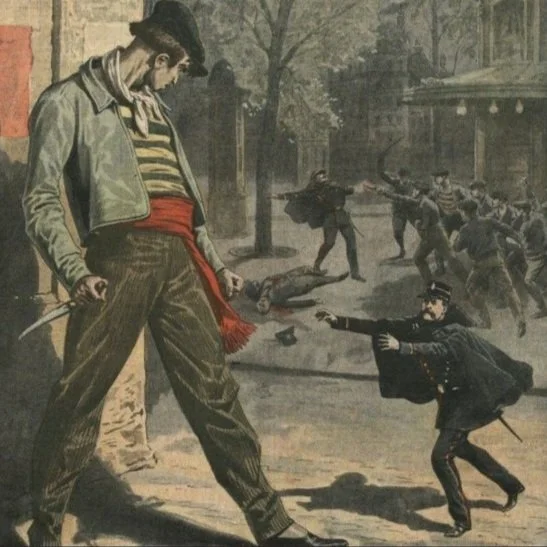
States continue to struggle in their efforts to counter organised crime, with it proving too adaptable and too resilient to be seriously affected. This monograph it applies an “irregular warfare” lens to the problem of organised crime, helping to situate the divergent criminal activity within its crucial political context. It goes on to propose ‘A Framework for Analysis and Action’, adapted from a framework for tackling irregular warfare, to guide the analysis and planning of those who are charged with responding to the challenge of organised crime.
David H Ucko & Thomas A. Marks
(NDU Press)
July 2025

Total Peace Policy: Between light and shadow: A framework to analyse Colombia’s comprehensive peacebuilding policy
Contrary to initial expectations, Colombia’s Total Peace Policy have not progressed as quickly or effectively as anticipated, leading to the unintended consequence of increasing armed and criminal groups capacity to govern the territories involved in negotiations, prompting some to think the policy is strengthening both rebels and criminals. This new research paper explores the argument and demonstrates that this trajectory is not generic: it depends on the armed and criminal actors, and the specific areas and the populations involved. Through comparison of negotiations’ in three regions, the paper explores not only which aspects of life are governed, but also how they are governed.
Kyle Johnson, Felipe Botero, Mariana Botero, Andrés F. Aponte, and Lina M. Asprilla.
March 2025

“Total Peace” in Colombia: Lessons for Negotiating with Organised Crime Groups and Promoting Peacebuilding
Drawing on the findings of two new research papers from the SOC ACE research project, “Negotiating with Criminal Groups: Colombia’s Total Peace” this briefing note explains how implementation of Colombia’s Total Peace Policy provides important lessons and implications for policymakers and scholars in organised crime, conflict resolution and negotiations, and peacebuilding; in particular: the need to understand the evolving nature of violence; the importance of coordinating between local and national authorities; appropriation of the concept of “hybrid political orders”; and the importance of timing and sequencing in negotiations.
Felipe Botero, Juanita Durán, Kyle Johnson, Mariana Botero, Andrés F. Aponte, Lina M. Asprilla.
March 2025

Institutional architecture of Total Peace: A normative review studied in practice
This new research paper explores the institutional architecture of Colombia’s Total Peace Policy, (“Paz Total”) answering two key questions: 1) what is the Policy’s institutional context, and 2) how is it being implemented by the negotiating groups. The research examines implications of the Policy’s degree of centralisation, as well as the expectations and actual involvement of local authorities and the robustness of it’s legal framework.
Juanita Durán
March 2025
Negotiating with Criminal Groups: Colombia’s “Total Peace”
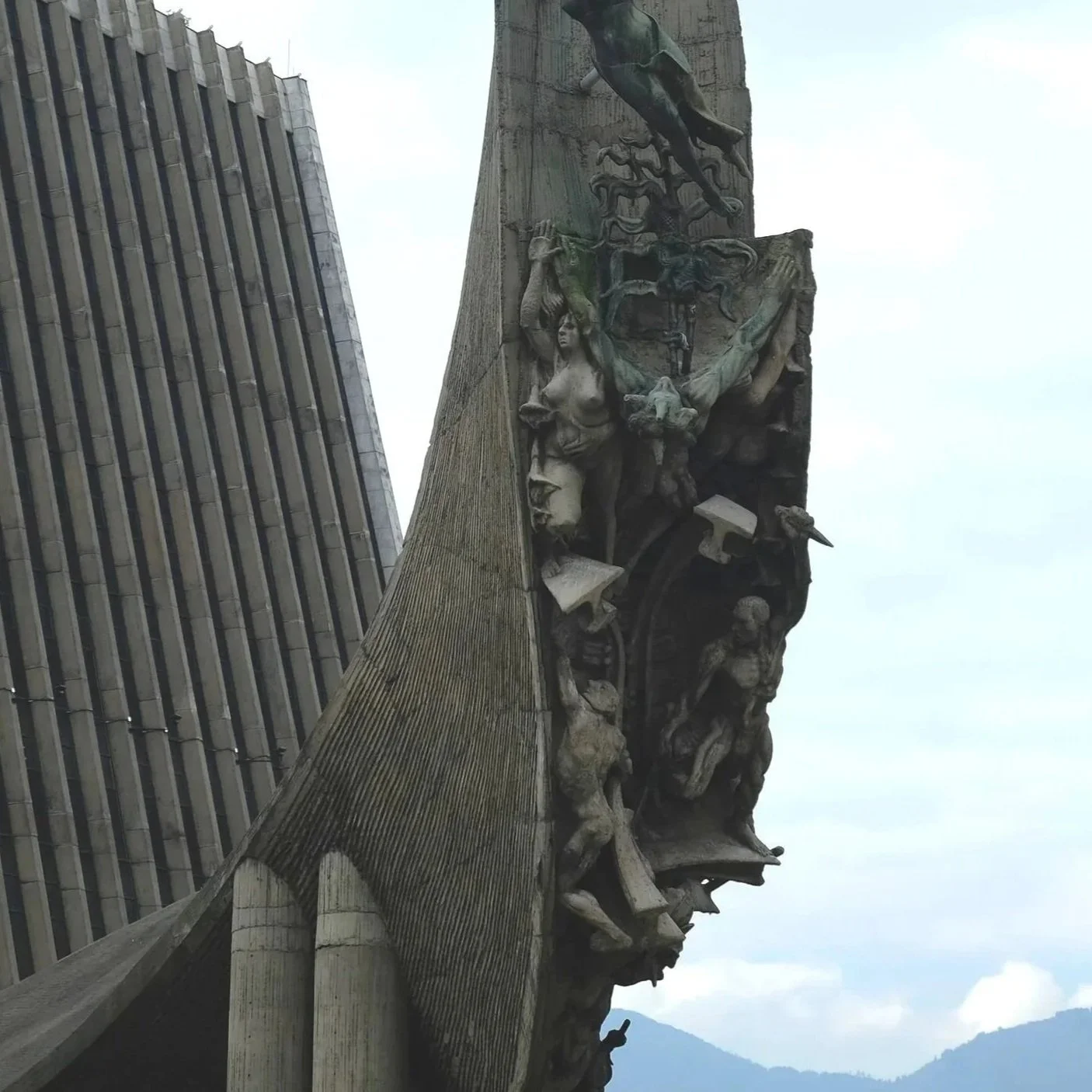
Drawing on the findings of two new research papers from the SOC ACE research project, “Negotiating with Criminal Groups: Colombia’s Total Peace”, this briefing note summarises lessons for negotiating with criminal groups found through fieldwork in three regions of Colombia – Buenaventura, Arauca and Tumaco. The note focuses on two critical issues that emerge in contexts where rebel and criminal governance coexist with formal institutions.
Felipe Botero, Juanita Durán, Kyle Johnson, Mariana Botero, Andrés F. Aponte, Lina M. Asprilla.
March 2025
Addressing Organised Crime and Security Sector Reform and Governance: Linkages, processes, outcomes and challenges
This evidence review paper explores how security and justice institutions, organised crime, security sector reform and governance and counter-organised crime interventions influence and impact each other, positively and negatively.
Huma Haider
September 2024
Addressing Organised Crime and Security Sector Reform and Governance: Linkages, processes, outcomes and challenges
This briefing note summarises an evidence review paper exploring how security and justice institutions, organised crime, security sector reform and governance and counter-organised crime interventions influence and impact each other, positively and negatively.
Huma Haider
July 2024

Grupos del crimen organizado, agendas criminales, violencia y conflicto: Implicaciones en materia de participación, negociación y procesos de paz
Negociar con grupos de crimen organizado en procesos de paz es ahora una realidad práctica; sin embargo, la investigación sobre este tema sigue siendo limitada. Este documento aborda esta laguna revisando diversa literatura y resaltando la necesidad de un marco que vaya más allá de la confrontación, promoviendo la acomodación y una transformación social más amplia.
Huma Haider
Julio 2024

Human Rights and Organised Crime Agendas: Four Areas of Convergence for Policymaking
This briefing note identifies four areas that justify greater attention to the fundamental rights of natural persons, and convergence in the human rights and crime agendas: (1) (Organised) crimes that amount to human rights violations (2) Violation of rights due to lack of remedies for crimes committed by OCGs (3) Violations of human rights committed in the context of preventing and combating OC (4) Lack of accountability for human rights violations by OCGs
Ana Paula Oliveira
April 2024