
PROJECTS
Here, you will find a one-stop-shop for each SOC ACE research project including publications, information about events and external engagement, media and contact details for researchers.

Exploring the threat of Chinese professional money laundering
Awareness has grown in recent years over the role that Chinese Professional Money Laundering Organisations (PMLOs) play in facilitating transnational crime and the threat that this poses to countries in the West. Whilst their rise can be seen to coincide with Chinese state decisions, such as its capital controls that prevent the free flow of money out of the country, there is little research on the potential links between Chinese PMLOs and the Chinese state, including on the question as to whether Chinese PMLO activity should be considered alongside other state threats. This research will, a) look into the evolution of the Chinese PMLO threat, comparing well-established operations in the US and Canada with more nascent operations seen in Europe, and b) explore their role in the context of Chinese state activity.

The Role of Financial Rewards for Whistleblowers in the Fight Against Economic Crime
This research analyses the impact of whistleblower reward programmes and scrutinises whether the concerns that have been raised regarding their implementation have eventuated in practice. Furthermore, it considers what factors have been shown to be necessary for such a scheme to operate as part of a wider strategy to increase the effectiveness of economic crime investigations and concludes with observations for policymakers considering the introduction of whistleblower rewards.

Smuggling along the new silk road: The role of Global Trade Hubs (GTH)
The project evaluates the role of Global Trade Hubs (GTH) along the maritime Silk Road in facilitating illicit activities, particularly smuggling, leveraging proven methods based on mirror trade statistics. By comparing these findings with existing assessments of illicit activities and flows, the project aims to provide insights into the potential risks associated with GTH involvement in illicit financial flows (IFFs).

Power Brokers and Illicit Markets in the Frontiers: Balochistan, Borderlands and the Taliban
The project seeks to investigate how illicit markets shape and are shaped by the local political, power, patronage and frontier dynamics in Balochistan - the area spanning the frontier regions of three countries: Iran, Pakistan, and Afghanistan.

Information Manipulation and Organised Crime
Information manipulation has been a growing concern in recent years, particularly in relation to the disinformation tactics employed by authoritarian regimes. However, the role of non-state actors, such as organised crime (OC) groups, in information manipulation has been largely overlooked. This evidence review aims to fill this gap by examining the various ways in which OC groups manipulate information to achieve their objectives and those of actors connected to them. Drawing on Nicholas Barnes' concept of 'political criminality' as well as on Makarenko’s OC-terrorism nexus framework, this study examines the varying degrees of proximity between criminal actors and the state …

Illicit finance and Russian foreign policy: new dynamics and linkages
This project examines how Russia is using illicit financial flows (IFF) to support its military campaign against Ukraine and to further its wider foreign policy goals. The scale of Russian use of illicit financial networks has increased rapidly since February 2022. Unless effectively countered, Russia's use of financial and economic tools will give it an advantage in its war against Ukraine and may begin to pose a potential systemic threat to international financial and trading systems. The research seeks to conceptualise how Russia uses illicit finance in political interference and information campaigns around the world, and how these dynamics may be changing in the new context of the war in Ukraine.

Exploring the Consequences of Organised Crime and Illegal Trade Displacement on Eurasia
The war in Ukraine and sanctions on Russia are leading to tectonic changes in Eurasia’s illicit scene. The war has disrupted licit and illicit supply chains throughout the region, changed routes of trafficking and shifted production of illicit commodities. This project aims to understand changing dynamics in respect of the following: a) threats in borderlands and seaports; b) opportunities in neighbouring countries as legal companies and criminal enterprises step in to fill the void of meeting the demand on sanctioned goods in Russia; c) actors in smuggling and trafficking; and d) elite bargains related with illicit flows.

Para-statal armed groups, illicit economies and organised crime
This two-phase research project starts by examining the nexus between parastatal armed groups (PAGs), illicit economies and organised crime, with a particular focus on the borderlands of Afghanistan, Myanmar and Colombia. In two research papers, this first phase has explored the relationship between coercive brokers, public authorities and frontier governance, how paramilitaries become involved in illicit economies and organised crime, the relationship between paramilitaries, organised crime and politics, and what policy combinations can address coercive brokerage in conflict-affected borderlands. The second phase has brought together policymakers to explore new approaches to addressing the challenges posed by paramilitaries. Case studies highlighting key lessons from interventions in Colombia, Myanmar and Northern Ireland will be produced along with two further research papers.

Illuminating the role of third-country jurisdictions in sanctions evasion and avoidance (SEA)
This project examines why third countries – countries neither sending sanctions or the target of them – either facilitate sanctions evasion and avoidance (SEA) or support efforts to counter it. It focuses on sanctions relating to Russia since February 2022 and it based on rapid review of the thematic literature on SEA and empirical research in 13 third countries. Our analysis examines how flows of Russian financial and human capital and patterns of SEA changed since February 2022; what factors affect either facilitation of or support to counter SEA; what are the types of individuals/organisations that facilitate SEA, and what methodologies and typologies do they use.

Exploring mechanisms to recover the proceeds of kleptocracy
This project seeks to contribute to the ‘freeze to seize’ debate: how to move from temporary sanctions-based asset freezes of Russian-linked assets towards more permanent asset deprivation via criminal justice confiscation mechanisms. It does so by examining a range of established asset confiscation concepts and their operationalisation in specific jurisdictions, which have their basis not in sanctions designations but in evidentially-driven and judicially-overseen criminal justice processes. The research sets out the current limitations of UK civil recovery mechanisms and looks at examples of three alternative mechanisms (lowering the standard of proof, reversing the burden of proof and ‘societal danger’ models) across …

State capture and serious organised crime in South Africa: The case of the South African Revenue Service
This research project is a detailed case study of state capture at the South African Revenue Service (SARS). State capture is more endemic than ordinary corruption at an individual level and occurs at a far wider systemic level. State capture entails a systematic and well organised effort of a group of people to misdirect public resources from their intended purpose into the hands of a private elite for corruption and political patronage purposes. It is supported by high-level political protection through the infiltration and weakening of state institutions.

Narcotics smuggling in a new Afghanistan
This research is part of the project ‘Monitoring the evolution of the illicit economy in Afghanistan’ which seeks to develop an overarching framework to better understand how a monitoring system for illicit markets in Afghanistan could operate. This will provide policy-makers in Europe and elsewhere with more advanced tools for scenario planning illicit trade developments and thereby formulate more effective policy responses against them. The research paper examines Afghanistan’s narcotics trade and smuggling patterns, which are intertwined in different ways with the economic fate of the Afghan state and society.

Transnational governance networks against grand corruption: Law enforcement and investigative journalists
Grand corruption is a transnational problem requiring cooperation among anti-corruption actors. Law enforcement actors find that cooperation is difficult to achieve. This has been attributed to; the political sensitivity of investigations, lack of trust among agencies, difficulties in sharing intelligence securely, weaknesses and discrepancies in capacity, and organisational incentive structures that favour quick and easy cases. However, investigative journalists, increasingly cooperate across borders to investigate, and expose corruption. This research explores these two under-researched sets of anti-corruption actors, specifically the challenges to cooperation and possible solutions among law enforcement agencies; among investigative journalists; and between the two groups of actors.

Assessing the illicit finance and terrorist financing nexus in the case of Afghanistan since the fall of the Taliban in 2001
With the fall of the Ghani government in August 2021 and the return of the Taliban to power in Afghanistan, the future of the international community’s financial relationships with the governing regime in Kabul should be reassessed. An understanding of the difference between illicit finance risks and terrorist financing risks emanating from the country, as well as the nexus between them, is critical for this purpose.
Combatting trade-based money laundering: Do the Financial Action Task Force recommendations bite?
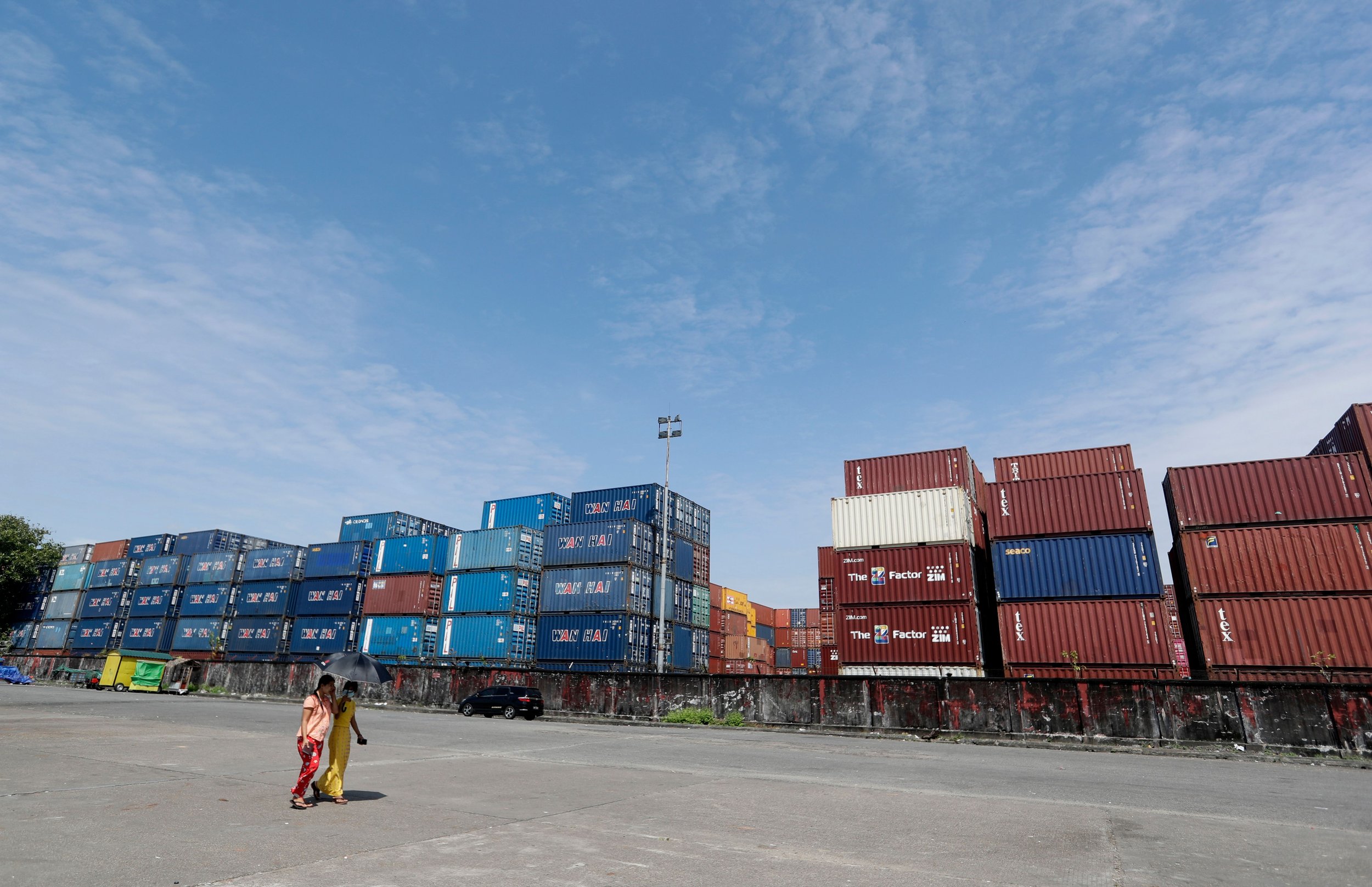
The Financial Action Task Force (FATF) focuses on combatting money laundering. In February 2012, it codified its recommendations setting the global standard on combating money laundering and terrorist financing. Countries voluntarily accept FATF recommendations and must produce their anti-money laundering (AML) framework for assessment by FATF once they’ve accepted. This project examines eight African and Middle Eastern countries that voluntarily implemented these recommendations from 2012 to 2020. It tests the hypothesis: Does implementing FATF recommendations reduce trade gaps? Using a ‘difference in difference’ methodology the project tests whether suspected illicit financial flows (IFF), measured through the trade-gap methods, decline after the decision to implement FATF recommendations.
Illicit markets and targeted violence in Afghanistan
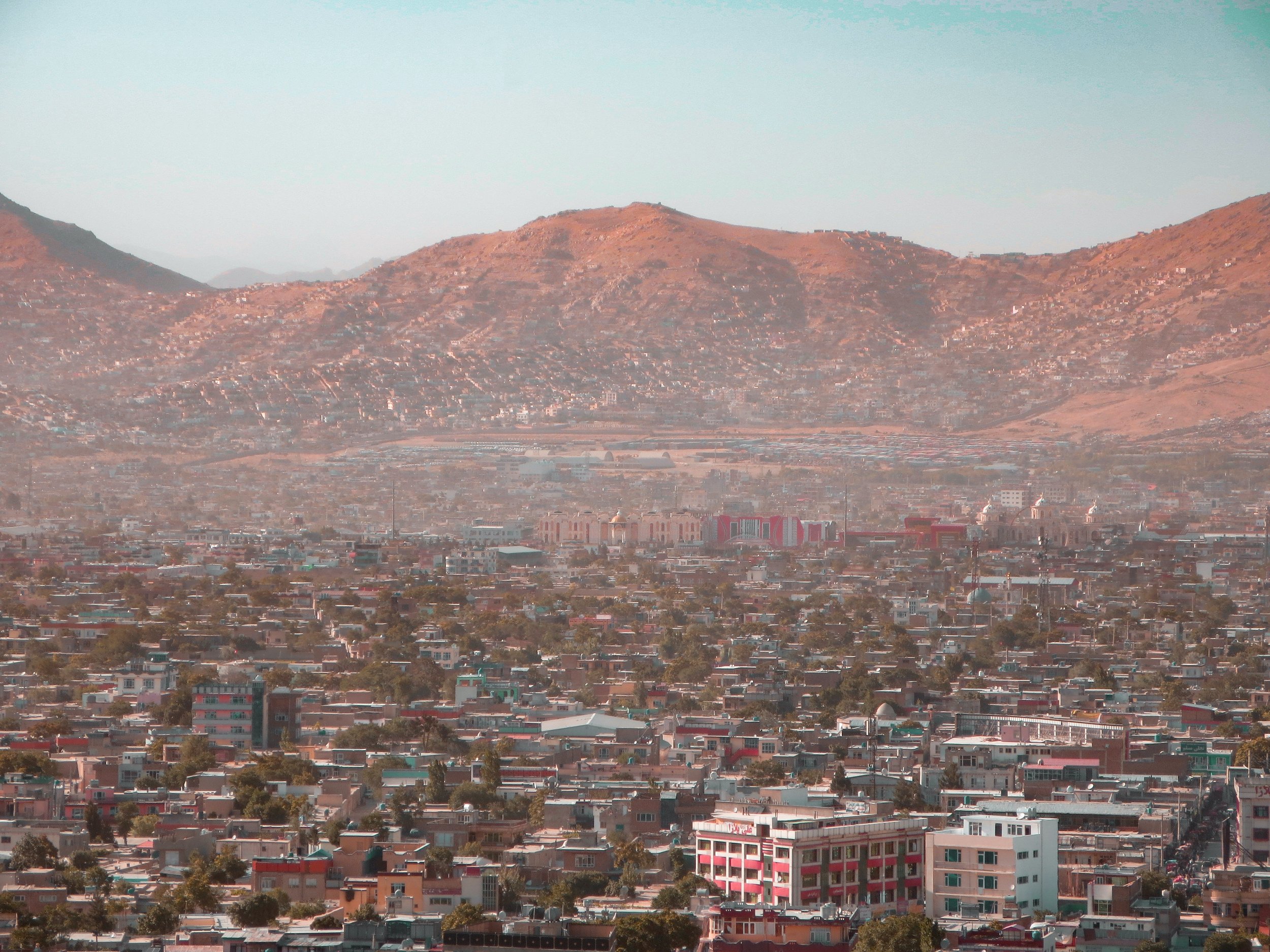
This project examines the potential of using illicit market violence in Afghanistan as a proxy to project current and future trends of other illicit and criminal market development in the country. It does so by using a methodology developed by GI-TOC to examine targeted assassinations. By applying variables from the methodology to research and analysis on targeted violence in Afghanistan during a period of increased violent crimes against civilians (2020-2021), the project map recent trends in the country and aims to explore whether monitoring such violence can serve as a proxy for understanding the changing dynamics of illicit economies and criminal actors at the national and regional scale.