
Port Politics: A service characteristics approach to countering organised crime
Project Live
PROJECT TEAM

Cathy Haenlein
Royal United Service Institute
Contact: CathyH@rusi.org
Director of Organised Crime and Policing Studies at RUSI. Her research explores the multilayered threat posed by serious and organised crime, including the shifting intersections between transnational criminal markets, licit economies and other threat areas. As a subject-matter expert in organised crime, illicit trade, corruption, natural resource governance and environmental security, Cathy has authored over 80 papers, chapters and short-form articles, and has presented insights at some of the world’s most influential platforms, including the UN, G7, G20 and OECD.
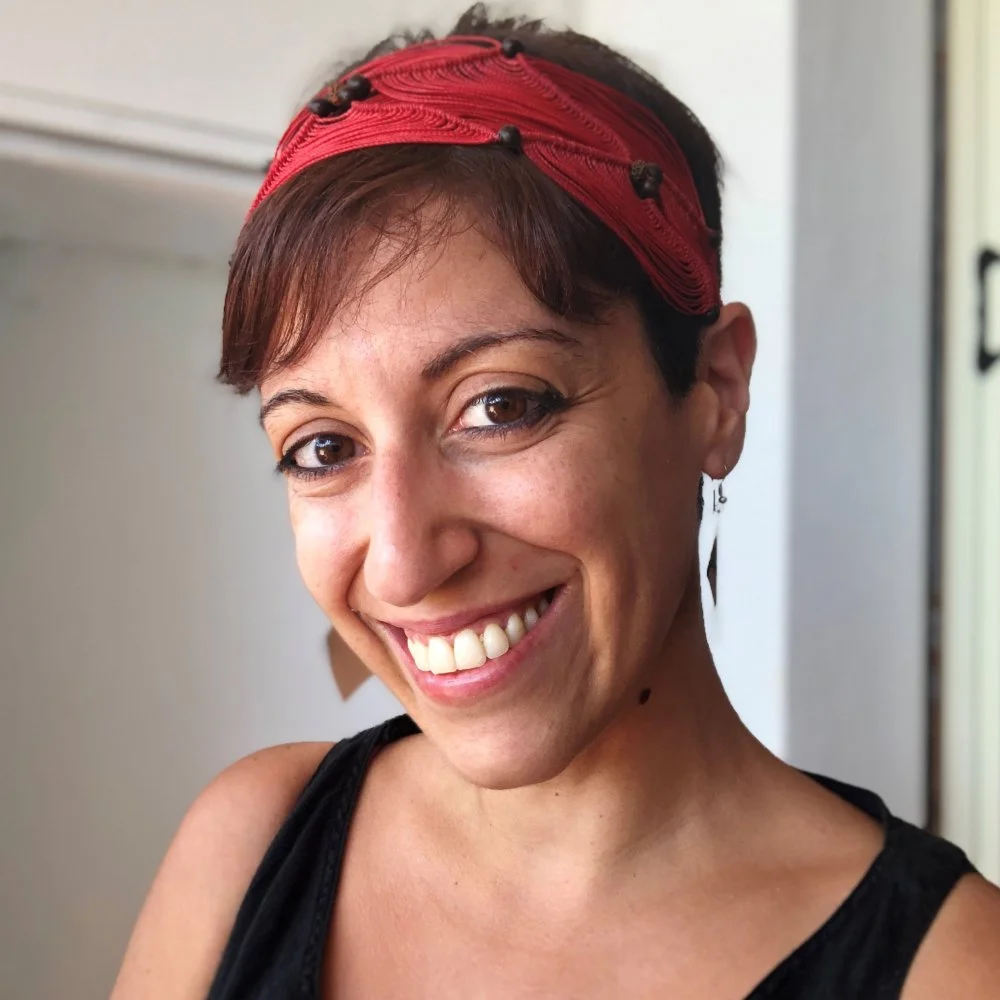
Anna Sergi
University of Bologna
Contact: anna.sergi@unibo.it
Anna Sergi is a professor of sociology, law and deviance at the Department of Political and Social Sciences of her Alma Mater University in Bologna. The field of her research is critical and cultural criminology.
Before arriving in Bologna in October 2025, Anna worked for ten years as a Professor of Criminology at the University of Essex, UK. She has written books and scientific articles on the 'Ndrangheta in Italy and around the world, including Australia, Canada and Europe, and on cocaine trafficking in port cities.


Elijah Glantz
Royal United Service Institute
Contact: ElijahG@rusi.org
Elijah Glantz is a Research Fellow for the Organised Crime and Policing Team (OCP) at RUSI. His research at RUSI focusses on criminal networks structures, illicit finance and law enforcement responses around the world. Specific projects include the use of targeted sanctions against organised crime, state involvement in organised crime and narcotics, and wider illicit markets. Furthermore, Elijah is engaged in OCP’s ongoing work on policing and policy engagement with media and government officials – in the UK and globally – on a range of OCP’s research topics.
Mark Williams
Royal United Service Institute
Contact: MarkW@rusi.org
Mark Williams is Programme Manager for the Organised Crime and Policing Team (OCP) at RUSI. He provides technical assistance and project management support to the full range of projects and programmes run by OCP. He further oversees all outreach and visibility functions of the team, including the administration of the Strategic Hub for Organised Crime Research (SHOC).
His research covers a range of topics related to transnational organised crime, including maritime security, environmental security and illicit financial flows.

PROJECT SUMMARY
Seaports are among the most significant nodes in transnational criminal supply chains globally. They have a range of unique organisational and geographic characteristics and are vulnerable to criminal infiltration on multiple levels. The technical operations involved dictate the ease with which organised crime groups can exploit them. Just as crucially, the political dynamics surrounding the port sector and key facilities are of direct relevance to the ease of criminal penetration.
Achieving security improvements requires strategies that are not only technically sound but also politically feasible, necessitating an understanding of the political dynamics at play in the relevant port environment. Yet little research has been conducted to interrogate these dynamics – or their implications for the effectiveness of structural reforms targeting criminal exploitation and corrupt incentives. Instead, efforts to address criminal abuse have often concentrated on procedural improvements, with a focus on the technical and managerial aspects of port operations.
To address this gap, this research project examines the political interests, incentives and institutions involved in seaport functioning, using a service characteristics approach to establish structural weaknesses, political commitment and other factors that support or undermine efforts to counter criminal and corrupt activity. The research provides policymakers with novel insights to inform strategic decision-making amidst an expanding policy focus on resilience of port facilities. The research will answer three main research questions:
1) What characteristics, intrinsic to port services and infrastructure, present political and practical constraints to efforts to strengthen the resilience of seaports and protect them from criminal activity, and why?
2) What type of interventions have been undertaken to harden seaports against criminality, how far have these accounted (directly or indirectly) for technical and political dynamics, and what have been the (intended or unintended) consequences?, and
3) How should future SOC-focused port interventions consider the particularities of port service characteristics, and their implications for political dynamics, to ensure more effective outcomes?
PUBLICATIONS
RELATED PROJECTS

Smuggling along the new silk road: The role of Global Trade Hubs (GTH)
The project evaluates the role of Global Trade Hubs (GTH) along the maritime Silk Road in facilitating illicit activities, particularly smuggling, leveraging proven methods based on mirror trade statistics. By comparing these findings with existing assessments of illicit activities and flows, the project aims to provide insights into the potential risks associated with GTH involvement in illicit financial flows (IFFs). Read more

Addressing security actors’ involvement in serious and organised crime
This project examines what drives political elites to curtail political and security actors’ involvement in serious and organised crime. It considers what sets of reforms are most effective at countering state security actors’ involvement and what makes political elites decide to initiate reform. Learn more...

Moving ‘from political won’t to political will’ for more feasible interventions to tackle serious organised crime and corruption
This briefing note from Professor Heather Marquette examines the connections between (lack of) political will and serious organised crime (SOC) and corruption. It suggests a new way to better understand political will and why a lack of political will may appear to exist. Read more…