Negotiating with criminal groups: Colombia’s Total Peace policy
Project live in second phase
PROJECT TEAM

Felipe Botero Escobar
Global Initiative Against Transnational Organised Crime
Contact: felipe.botero@globalinitiative.net
Felipe joined GI-TOC in 2021 as Coordinator for Colombia. He focuses on strengthening community resilience against organised crime and crime prevention, supporting the Resilience Fund, and expanding the GI-TOC presence in Colombia and the region. Felipe has extensive experience in peace building, DDR, human rights, citizen security, and civic participation. Previously, he served as Undersecretary of human rights and Peacebuilding in Cali, implementing public policies and supporting Colombia's peace agreement. Felipe holds a master’s degree in public policy and a Political Science degree.

Mariana Botero Restrepo
Global Initiative Against Transnational Organised Crime
Mariana joined the GI-TOC in 2021 as an Analyst in Colombia, where her work has focused on prevention, community resilience against organised crime, research, and supporting the expansion of GI-TOC in the country. Mariana previously worked as a political advisor and human rights policy officer for the British Embassy in Colombia and focuses on the peace process, human rights defenders, PSVI and media freedom. She holds a bachelor’s degree in political science.

Juanita Durán
Laboratorio de Justicia y Política Criminal
Contact: juanitaduran@labjpc.org
Juanita is a lawyer specialising in economics and constitutional law, with an LLM from UCL, with over 15 years of experience drafting and evaluating public policy, regulation and legislation, designing and implementing strategies for institutional transformation and connecting data analysis and policy on criminal policy and access to justice. Ms. Duran served in the Colombia’s Attorney General’s Office as Director of Policies and Strategies and led the implementation of the Protocol to investigate sexual violence and the implementation of the peace strategy. She is currently a senior researcher at the LJPC and from there she has led and participated, among others, in the police transformation process.

Lina María Asprilla
Lina María Asprilla is an analyst in the GI-TOC’s Andean Regional Office where she supports the implementation of projects and strategies for community resilience to organised crime, and crime prevention. She has extensive experience in peacebuilding, analysis of security conditions, implementation of the Colombian peace process with the, and working with communities in Colombia.

Andrés Aponte
Andrés Aponte is a researcher and consultant for NGOs, think tanks and government entities. His main interest lies in analysis of the dynamics and logics of armed conflict, particularly from the perspective of the organisational and territorial trajectories of armed groups and the social orders they form amid violent conflicts.
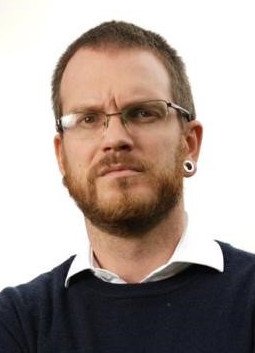
Kyle Johnson
Conflict Responses - CORE
Contact: kjohnson@conflictresponses.org
Senior analyst at Conflict Responses - CORE. Political scientist from the University of Connecticut and with a master's degree in political science from the Universidad de los Andes. He has researched the Colombian armed conflict since 2006. His focus has been illegal armed groups; rebel and criminal governance; local peacebuilding; illicit economies; and DDR. Worked for the Nuevo Arco Iris Corporation, the National Center for Historical Memory, the International Organization for Migrants, the International Crisis Group, Human Rights Watch, and the Kroc Institute.

Ángela Liliana Olaya Castro
Conflict Responses - CORE
Contact: aolaya@conflictresponses.org
Senior analyst at Conflict Responses - CORE. Member of the network of Women in Security and Defence in Latin America and the Caribbean - Amassuru. Political scientist from the Universidad de Los Andes, with an emphasis in Colombian history. Her experience focuses on the analysis of the relationship between the Colombian armed conflict, organised crime, and humanitarian impacts. She has worked on the Early Warning System of the Ombudsman Office in Colombia, the International Organization for Migrants and different NGOs to investigate the conflict and transnational organised crime.


PROJECT SUMMARY
Colombia continues to face high levels of violence despite the 2016 peace agreement, with a proliferation of armed and criminal groups shaping local security dynamics. President Gustavo Petro’s 2022 Total Peace (Paz Total) policy, which seeks to pursue multiple simultaneous negotiations with these actors, provides a unique opportunity to generate evidence on how contemporary negotiation and DDR approaches function in complex criminalised conflict settings.
Phase one of the research examined Paz Total processes across three regions, highlighting how variations in local political economies, criminal governance structures, and state presence shape negotiation trajectories and outcomes. It found that these dynamics can generate unintended or perverse effects if not anticipated, and underscored the importance of disrupting links between criminal actors and state institutions. The research also identified key structural constraints, particularly the absence of a coherent legal framework and high levels of centralisation, which have limited the effective operationalisation of Paz Total.
Building on these findings, phase two of the project focuses on a critical but under-examined actor across both Paz Total and earlier DDR processes: mid-level commanders. Evidence from phase one and the wider literature points to their pivotal role in shaping patterns of violence, sustaining criminal economies, and mediating relationships between armed groups, communities, and the state. However, both past and current policy frameworks have largely overlooked this group, tending instead to focus on senior leadership or rank-and-file combatants.
Phase two, which is currently underway, seeks to address this gap by examining who mid-level commanders are, the functions they perform within systems of territorial and criminal governance, and the factors that influence their trajectories after demobilisation, including the risks of rearmament or transition into criminal leadership. It also explores which differentiated reintegration, security, and negotiation strategies may be most effective given organisational and sub-regional variation. Through a combination of desk-based analysis and ongoing fieldwork in key regions, the research aims to generate empirically grounded insights to inform more targeted and effective policy responses.
Overall, the project contributes to advancing DDR and negotiation practice in Colombia and comparable contexts by identifying how Paz Total and future processes can better reflect the realities of contemporary criminal governance systems.
If you’ve found the research useful in your day-to-day work please do let us know by sending us an email at: impact-socace@contacts.bham.ac.uk
PUBLICATIONS
-
Durán, J., (2025), Institutional Architecture of Total Peace: A normative review studied in practice (SOC ACE Research Paper 33). Serious Organised Crime and Anti‑Corruption Evidence (SOC ACE), University of Birmingham.
Durán, J., (2025), Arquitectura institucional de la Paz Total: Análisis del proceso normativo en la práctica, (Trabajo de investigación SOC ACE 33). Serious Organised Crime and Anti‑Corruption Evidence (SOC ACE), Universidad de Birmingham.
Johnson, K., Botero, F., Botero, M., Aponte, A., & Asprilla, L. (2025). Total peace policy: Between light and shadow: A framework to analyse Colombia’s comprehensive peacebuilding policy (SOC ACE Research Paper No. 34). Serious Organised Crime and Anti‑Corruption Evidence (SOC ACE), University of Birmingham.
Botero, F., and Johnson, K., et al (2025), Política de Paz Total: Entre luces y sombras: Marco para analizar la política integral de construcción de paz de Colombia. (SOC ACE Documento de investigación 34). Serious Organised Crime and Anti‑Corruption Evidence (SOC ACE), Universidad de Birmingham.
-
Aponte, A. F., Asprilla, L. M., Botero, F., Johnson, K., Durán, J., & Botero, M. (2025). Negotiating with criminal groups: Colombia’s “Total Peace” (SOC ACE Briefing Note No. 35). Serious Organised Crime and Anti‑Corruption Evidence (SOC ACE), University of Birmingham.
Aponte, A. F., Asprilla, L. M., Botero, F., Johnson, K., Durán, J., & Botero, M. (2025). Negociar con grupos criminales: La «Paz Total» en Colombia, (SOC ACE Nota informativa n.º 35). Serious Organised Crime and Anti‑Corruption Evidence (SOC ACE), Universidad de Birmingham.
Aponte, A. F., Asprilla, L. M., Botero, F., Johnson, K., Durán, J., & Botero, M. (2025). “Total Peace” in Colombia: Lessons for Negotiating with Organised Crime Groups and Promoting Peacebuilding, (SOC ACE Briefing Note 36). Serious Organised Crime and Anti‑Corruption Evidence (SOC ACE), University of Birmingham.
Aponte, A. F., Asprilla, L. M., Botero, F., Johnson, K., Durán, J., & Botero, M. (2025). «Paz Total» en Colombia: Lecciones para negociar con grupos criminales organizados y promover la consolidación de la paz (SOC ACE Nota informativa n.º 36). Serious Organised Crime and Anti‑Corruption Evidence (SOC ACE), Universidad de Birmingham.
EVENTS & MEDIA
-
Global Initiative Against Transnational Organised Crime. (2024, October 28). Colombia & Total Peace: Part 1 – “The ELN – The Easy Win”[Audio podcast episode]. In Deep Dive: Exploring Organised Crime.
The first in a three part series, this episode provides an overview of the Total Peace policy including its aims, scope and mechanisms as well as the actors involved, and starts to explore how the policy is progressing, its implications for communities and whether its working. Listen HERE!
Global Initiative Against Transnational Organised Crime. (2024, November 27). Colombia & Total Peace: Part 2: Buenaventura – “The Pact for Life” [Audio podcast episode]. Deep Dive: Exploring Organised Crime.
In this podcast episode, the team discusses how in September 2022, two gangs in Buenaventura signed a truce to end the bloodshed that had gripped the city for two years - called 'The Pact for Life'. show how there has been a reduction in homicides since the Pact’s signing, but that this statistic hides the fact that other crimes have increased - extortion, disappearances, control of movement, and the "justice" (fines, beatings or murder) meted out on the population by the gangs. Listen HERE!
-
Global Initiative Against Transnational Organised Crime. (2024, October 30). Peace negotiations with organised crime: The case of Medellín, Colombia[Conference panel]. OC24 – 24‑hour Conference on Global Organised Crime.
Featuring: Juanita Durán (Laboratorio de Justicia y Política Criminal) & Felipe Botero (GI‑TOC).
ECPR General Conference 2026, Jagiellonian University, (8-11 September 2026). ‘Rethinking the Real Politics of Organised Crime in an Era of Growing Scarcity’. [Conference panel].
Featuring: Felipe Botero (GI‑TOC). Criminality and New Cycle of Violence: Evidence from Colombia.
RELATED RESEARCH PROJECTS

Organised crime groups and peace processes
A review of the evidence on the recognition and involvement or organised crime groups in peace negotiations. Learn more here…

Developing government information and accountability systems for combatting serious organised crime
A multi-year research project to demonstrate the feasibility of collecting a wider range of metrics on SOC and how they can be fed into policymaking, programming, evaluation, and accountability loops. Read more here…

Incorporating serious organised crime into understandings of elite bargains and political settlements
Addressing the evidence gap on organised crime actors and elite bargains and political settlements. Read more here…

Addressing organised crime through a transitional justice framework
Reviewing the evidence on the linkages between transitional justice, corruption, and organised crime. Learn more here….

Parastatal armed groups, illicit economies and organised crime
Examining the nexus between paramilitaries, illicit economies and organised crime looking at the concept of coercive brokerage and analysing paramilitary-organised crime linkages in borderlands. Read more here…