Developing government information and accountability systems for combating serious organised crime: Medellín demonstration project
Project Live
PROJECT TEAM
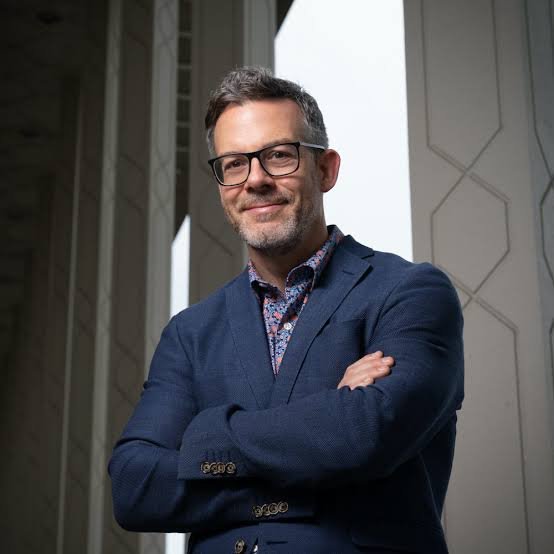
Professor Christopher Blattman
University of Chicago
Contact: blattman@uchicago.edu
Christopher Blattman is an economist and political scientist who uses fieldwork and statistics to study poverty, political engagement, the causes and consequences of violence, and policy in developing countries. He is a professor in the Harris School of Public Policy at the University of Chicago and the author of Why We Fight: the roots of war and the paths to peace.

Professor Santiago Tobón
Universidad EAFIT
Contact: stobonz@eafit.edu.co
Santiago Tobón is an economist with a special interest in crime, violence, organised crime, and public policy. He uses experimental, quasi-experimental, and qualitative methods. He is a professor in Universidad EAFIT in Medellín, Colombia, and was a visiting professor in the Harris School of Public Policy at the University of Chicago.



PROJECT SUMMARY
Like most cities, the Medellín Mayor’s Office and the Colombian police focus their efforts on managing what they measure--homicides and violent crime. While of course there are legitimate reasons to tackle violence, there is relatively less attention to other deleterious effects of SOC: high levels of civilian extortion, criminal political control of civilians, criminal capture of local, state, and community governments, retail drug sales, and so forth. In addition to being costly in and of themselves, these actions also undermine the local control and legitimacy of the state. We believe that these harmful consequences are overlooked in part because they are not measured. This reduces policymakers’ awareness of the problem. Perhaps more importantly, it limits the ability of elected officials and the public to hold the government accountable for these social ills. And finally, it limits the ability of the government to see the unintended and potentially harmful effects of their policies.
We aim to demonstrate the feasibility of collecting a wide variety of metrics on serious organised crime (SOC), and establish the practice of collecting, monitoring, and using these metrics for policy analysis, the design, and evaluation of programmes/policies to combat serious organised crime.
PUBLICATIONS
-
Blattman, C., Lessing, B., Mesa‑Mejía, J. P., & Tobón, S. (2022). Measuring organised crime: Challenges and solutions for collecting data on armed illicit groups (SOC ACE Briefing Note 3). Serious Organised Crime and Anti‑Corruption Evidence (SOC ACE), University of Birmingham.
Blattman, C., Lessing, B., & Tobón, S. (2022). The terrible trade-off: How the hidden cost of organised crime harms cities, and what can be done about it (SOC ACE Briefing Note 4). Serious Organised Crime and Anti‑Corruption Evidence (SOC ACE), University of Birmingham.
Blattman, C., Lessing, B., & Tobón, S. (2025). How to map and combat urban organised crime: Lessons from the Medellín Impact Lab (SOC ACE Briefing Note 33). Serious Organised Crime and Anti‑Corruption Evidence (SOC ACE), University of Birmingham.
Blattman, C., Lessing, B., & Tobón, S. (2025). The political will to measure organised crime: Why we need it and how to build it (SOC ACE Briefing Note 34). Serious Organised Crime and Anti‑Corruption Evidence (SOC ACE), University of Birmingham.
-
Blattman, C., Duncan, G., Lessing, B., & Tobón, S. (2023). Civilian alternatives to policing: Evidence from Medellín’s community problem‑solving intervention Operación Convivencia. Innovations for Poverty Action.
Blattman, C., Duncan, G., Lessing, B., & Tobón, S. (2024). Gang rule: Understanding and countering criminal governance.The Review of Economic Studies, 92(3), 1497–1531.
(Open access article)Lessing, B. (2024, August 9). Use incentives, not brute force, on the cartels, says a political scientist. The Economist (By Invitation).
Tobón, S., Sviatschi, M. M., & Cabra‑Ruiz, N. (2025). Organised crime and development (VoxDevLit Vol. 17, Issue 1). VoxDev.
ENGAGEMENT
-
Blattman, C. (2022, May 11). The terrible trade-off: Why less violent cities often means more powerful and organised crime. Chris Blattman Blog.
Tobón, S. (Guest). (2025, January 20). From gangs to growth: Fighting for the future of Medellín’s teens (Season 8) [Audio podcast episode]. In Stories of Impact. Talkbox Productions / Templeton World Charity Foundation.
Blattman, C. [@cblatts]. (2022, May 11). In this widely read Twitter thread, we feature the SOC ACE project in general [Tweet]. Twitter.
-
Early findings of the research has been featured by local and national media in Colombia, with Professor Santiago Tobón appearing on Colombian regional news channel Teleantioquia Noticias
Teleantioquia Noticias. (2024, April 5). Entrevista con Santiago Tobón, investigador del Centro de Valor Público EAFIT [YouTube video]. YouTube.
UPTAKE & IMPACT
-
Prof Christopher Blattman, Prof Santiago Tobón and Dr Benjamin Lessing has been used as an exemplar case study in how to better understand criminal violence and collaborate with government actors to develop, test and scale-up counter-SOC interventions, in the World Bank’s 2025 Latin America and The Caribbean Economic Review. The case study can be found on page 72 with the research team’s work referenced throughout.
RELATED PROJECTS

Negotiating with criminal groups: Colombia’s Total Peace policy
Colombia’s Total Peace Policy is creating a framework for Colombia’s government to negotiate with armed and criminal groups to reduce violence and protect life. This research project is exploring the different types of legal framework applied in the process, the ways in which criminal governance and the Total Peace policy interact, and seeks to understand which legal frameworks and local criminal governance structures shape such negotiations. Read more…

Addressing organised crime through a transitional justice framework
This research is reviewing the evidence on the connections between transitional justice, corruption and organised crime, pooling concepts and evidence to promote a shared narrative and framework for thinking about, discussing and addressing accountability and justice for human rights violations, corruption and organised crime. Read more…

Addressing organised crime and security sector reform and governance: Linkages, processes, outcomes and challenges
The research deepens the evidence base on the connections between security sector reform/governance and organised crime, looking into how they influence and impact one another, positively and adversely. It aims to encourage collaboration across academic disciplines and professional silos, integrating SSR/G perspectives and programming into the fight against SOC and vice versa. Read more…