Project in second phase
PROJECT TEAM
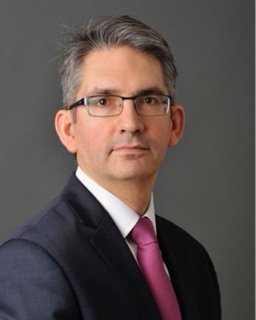

Matthew Redhead
Royal United Services Institute
Matthew Redhead is a senior associate fellow at RUSI. He is a former civil servant, management consultant and senior leader in financial crime intelligence in the private sector.
He has served as a government official at the Ministry of Defence (MoD), and on secondment at the Office of Security and Counter-Terrorism (OSCT) at the Home Office. He also has extensive experience in financial services, having trained as a ‘front office’ banker for HSBC in the 1990s, and worked for seven years in various senior roles in that same bank’s financial crime risk function, leaving as Global Head of Strategic Intelligence in April 2018. He is currently a freelance writer and consultant on issues relating to national security, intelligence and economic and financial crime and security.
Eliza Lockhart
Royal United Services Institute
Eliza Lockhart is a Research Fellow at the Centre for Finance and Security at RUSI. Her research examines matters at the intersection of law, finance, and global security; with a particular focus on how evidence-based policy can promote democratic resilience and protect the rule of law against foreign interference. Eliza’s current projects include whistleblowing, state threats and economic security.
Eliza is a lawyer and legal policy expert. She previously worked in Australia for Linklaters and has experience with international financial crime investigations, whistleblower investigations and high-profile litigation. Prior to joining RUSI, Eliza was Associate to The Hon. Justice Kenny AM, a senior judge of the Federal Court of Australia and Chairperson of the Australian Electoral Commission.
Eliza holds a Master of Laws (LL.M.) and an MPhil in Public Policy, both with Distinction from the University of Cambridge.
PROJECT SUMMARY
Over the last decade, states have faced a rising tide of hostile activities perpetrated by state actors and their partners using hybrid or unusual methods as vectors of attack which sit in the ‘grey’ zone between peace and war . This body of activities has become known by a variety of terms, such as ‘state threats’, ‘hostile state activity’ and ‘hostile activity by states’. Despite the growing importance of state threats as a specific policy challenge, current research on this topic has been limited.
Through a series of workshops with experts and practitioners, the need for a more precise definition of state threats and a clearer understanding of their scale, scope and character became apparent. In addition, as the issue of state threats has risen on the agenda, there is increasing interest in understanding the policy responses deployed against these threats and their perceived effectiveness. This research project addresses these needs.
Phase one of this research critically examined the language used to describe state threats and related concepts, including ‘hybrid’ and ‘grey zone’ activity, to develop a more robust conceptual framework to map their defining characteristics and operational patterns. Key findings, presented in the research paper ‘Old wine, new bottles?’ and a series of synthesis papers reviewing state threat actions of revisionist states, demonstrate that:
Covert and clandestine activities largely define ‘state threats’ actions, but they are often used in concert with more overt means of coercion such as diplomatic coercion and economic threats.
Although espionage, repression, sabotage and subversion are not new phenomena, much is unprecedented about the current state threats landscape. The volume and range of hostile activities being deployed are at a scale never seen before, taking advantage of new vulnerabilities in society, such as social media and societal reliance on technology.
The main perpetrators of hostile state activity are well-known - Russia, Iran, North Korea and China. However, a process of 'geopolitical climate change', driven by changing economic and political realities, has also encouraged several so-called ‘middle-powers’ to adopt similar methods. This development raises the risk that state threat type actions will proliferate in use, engendering instability in targeted states, and encouraging an escalatory cycle of tit-for-tat responses.
The second phase of research, currently underway, focuses on how Western states are responding to the challenge of state threats. It seeks to provide a more detailed understanding of Western strategies and policies, map out how, when and why such responses are applied, and identify whether there are broad patterns and ‘styles’ in approaches to hostile actions. Through review of academic and grey literature, as well as first-hand interviews, the research will offer insights for policymakers and practitioners on the perceived effectiveness of the range of policy response options.
PUBLICATIONS
-
Redhead, M. R. (2025). Old wine, new bottles? The challenge of state threats( SOC ACE Research Paper 32). Serious Organised Crime and Anti‑Corruption Evidence (SOC ACE), University of Birmingham.
-
Redhead, M. R. (2025). Old wine, new bottles? The challenge of state threats (SOC ACE Briefing Note 37). Serious Organised Crime and Anti‑Corruption Evidence (SOC ACE), University of Birmingham.
-
Redhead, M. R. (2025). An absence of peace, a rumour of war: The problem of defining state threats (SOC ACE Synthesis Paper 01). Serious Organised Crime and Anti‑Corruption Evidence (SOC ACE), University of Birmingham.
Redhead, M. R. (2025). Beyond the horizon: Revisionist states, middle powers and state threats in the Global South (SOC ACE Synthesis Paper 02). Serious Organised Crime and Anti‑Corruption Evidence (SOC ACE), University of Birmingham.
Redhead, M. R. (2025). Velvet glove, iron fist: Understanding China’s use of state threats (SOC ACE Synthesis Paper 03). Serious Organised Crime and Anti‑Corruption Evidence (SOC ACE), University of Birmingham.
Redhead, M. R. (2025). The hidden front: Russia’s ongoing state threats campaign (SOC ACE Synthesis Paper 04). Serious Organised Crime and Anti‑Corruption Evidence (SOC ACE), University of Birmingham.
Redhead, M. R. (2025). The logic of resistance: The ongoing state threats challenge from Iran (SOC ACE Synthesis Paper 05). Serious Organised Crime and Anti‑Corruption Evidence (SOC ACE), University of Birmingham.
-
Marquette, H., & Redhead, M. (2026). Illicit Outsourcing: Domain, Politics and the Limits of Operational Responses in State–Crime Relationships. The RUSI Journal, 171 (4), 68–82
Allison, O & Ihnatenko, O. (2026, July 29). Combatting the Illicit Financing of Hybrid Threats. Lessons from Russia’s Destabilisation of Europe. The RUSI Journal 171 (5) 38-43.
MEDIA & EVENTS
-
Lockhart, E. (2024). State threats workshop: Perspectives from Germany and the UK [Workshop Report]. Royal United Services Institute (RUSI).
Royal United Services Institute. Research paper launch event [Panel discussion]. Redhead, M. R. (2025). Old wine, new bottles? The challenge of state threats, SOC ACE Research Paper No. 32, University of Birmingham
Redhead, M., White, J., Jones, M., & Roberts, R. (2026, March 18), State threats in Sub-Saharan Africa: Identity, influence and insecurity [Research event recording]. Royal United Services Institute.
-
Haenlein, C. (Host) (2026, 01 July) Geopolitics, Statecraft and the Changing Face of organised Crime (Ep.123) In Global Security Briefing, RUSI
Redłowska, K. (Host). (2026, January 23). How Russian sabotage is financed and how to disrupt it (Ep. 11) In Suspicious Transaction Report. RUSI
Carvin, S., David, J., & West, L. (Hosts). (2025, February 25). Implausible deniability: The new age of state threats Secure Line Podcast. Canadian Association for Security & Intelligence Studies (CASIS).
Keatinge, T. (Host) (2025, January 17). State threats – Same old same old, or something different? (Ep.10) Suspicious Transaction Report Podcast. RUSI
Keatinge, T. (Host) (2023, June 23). Power, wealth and state threats (Ep.8) In Suspicious Transaction Report Podcast. RUSI
-
Blackall, M. (2025, January 15).‘Arson, sabotage, cyber attacks’: UK enters new era of threats from hostile states.The i Paper.
Burke, J. (2025, August 26).‘Iran has a long history of clandestine attacks abroad to further its ends’.The Guardian.
Corera, G. (2025, November 30). Playing spies [Radio broadcast]. BBC Radio 4.
UPTAKE & IMPACT
-
Hybrid Centre of Excellence. Handbook on the Role of Non-State Actors in Russian Hybrid Threats. 2026.
-
All‑Party Parliamentary Group on Fair Banking, Anti‑Corruption and Responsible Tax, & UK Anti‑Corruption Coalition. (2025). Clean foundations for growth: Unlocking economic opportunity by tackling economic crime.
RELATED PROJECTS

Exploring the threat of Chinese Professional Money Laundering Organisations
Research by Kathryn Westmore exploring whether the threat posed by Chinese Professional Money Laundering Organisations should be considered alongside other state threats and whether existing policy responses need to change to reflect this. Read more…

An absence of peace, a rumour of war: The problem of defining state threats
In this synthesis paper, Matthew Redhead builds on his most recent research paper, Old wine, new bottles: The challenge of state threats, to produce a forensic and provocative discussion Read more…

Information Manipulation and Organised Crime
Research by Dr Tena Prelec looks at the nexus of organised crime and information manipulation against the relationship with the state, testing a new conceptual framework on five case studies in Central and Eastern Europe. Read more…